Showing posts with label #Dutch Resistance. Show all posts

Thursday, March 26, 2020

VIEWS | 460K Top Ten Posts in March

Thanks for reading this blog! It has passed 460,000 Page Views. Google hosts this blog free, for which I am grateful.

Some blogs I write for have ads and Google pays the host when someone clicks on them. But there don't seem to be any ads on this blog.

Meanwhile, readers seem to appreciate it when I post a list of the links to the most popular posts on this blog. Here are the Top Ten in the last month. The most popular post was about Germany's low death rate from the coronavirus; it was boosted by a tweet from John Cassidy of the New Yorker, who thought it was a good question. Since then there have been several articles about how South Korea and Japan have shut down the spread of the virus by prompt action, and Italy has not done so. Younger generations (what are called Gen Z and the Millennials), who understand that the virus is usually not life-threatening for them, seem to have been eating out or even partying and brought home the virus to their families where older people are more vulnerable to severe illness. Research on this topic is still under way; I will be posting again here.

Entry
PANDEMIC | 1. Germany's Low Virus Death Rate
Mar 19, 2020,
PANDEMIC | 3. German, Italian Death Rates
Mar 21, 2020,
GERMAN ELECTIONS, 1933 | How a Democracy Was Destr...
Mar 5, 2017,
WW2 | 9. Resistance Banker–Wally van Hall (Updated...
Feb 19, 2015,
PANDEMIC | Breathing Equipment
Mar 21, 2020,
ART BIZ | Fireplace Project–Meckseper and Troemel
Aug 24, 2014,
WW2 | 6. Armed Resistance: Jan Canada and Sons (Up...
Jan 29, 2015,
NAZIS ELECTED | Germany Votes in Führer, 85 Years ...
Mar 7, 2018,
PANDEMIC | Homeschooling by Default
Mar 24, 2020,
HEIDI FISKE | Is Trump Seeking War?
Mar 26, 2018,

Sunday, October 21, 2018

VIEWS | 410K. Top Ten Posts

This
blog has passed 410,000 page views. Thank you for reading.

The following are the most-viewed CityEconomist posts in the last month. The reason for the large number of views of the first post, from 2015, is that a movie about Wally van Hall, the "Resistance Banker," originally produced in Dutch, has now been dubbed in English. It is available through Netflix under the movie title "Resistance Banker." I saw the Dutch version in April. My wife Alice has seen the dubbed English version and reports that it is excellent.


WW2 | 9. Resistance Banker–Wally van Hall (Updated...
Feb 19, 2015, 13 comments

UNIONS | Oct. 18–First American Trade Unions, 1648...
Oct 18, 2013, 10 comments

GERMAN ELECTIONS, 1933 | How a Democracy Was Destr...
Mar 5, 2017, 2 comments

WW2 | D-Day+70 Data
May 10, 2014, 1 comment

IMMIGRATION | Centennial of Immigration Act
Feb 5, 2017, 1 comment

DEMOCRATIC PRIMARY NY | Fake Democratic Senators
Sep 12, 2018, 2 comments

R.I.P. | Sep. 3–Andrew Kay, Kaypro-IBM (Comment)
Sep 7, 2014, 1 comment

OTTAWA | Fiddlers in The Glebe
Jul 16, 2018, 1 comment

DEMS RECOVER | Stages of Grief (Updated Nov. 17, 2...
Nov 13, 2016, 1 comment

ECONOMIC IMPACT OF 9/11 | Health Effects and the Z...
Jan 1, 2018, 1 comment

Thursday, August 18, 2016

VIEWS | 270K Top 10 Posts

Thank you for reading!

CityEconomist has just passed 270,000
page views.


Here are the 10 most-viewed posts in August 2016: 

BLACKOUT | Survival List
Jul 24, 2016.
DONALD TRUMP | Why Did He Run as a Republican?
Jul 25, 2016
SENIORS | Most Livable Cities
Aug 8, 2016.
WW2 | 9. Resistance Banker–Wally van Hall (Updated...
Feb 19, 2015, 5 comments
SENATE 2016 | Top Races (Heidi's Picks)
Aug 5, 2016
LEHMAN | Did It Have to Fail?
Jul 22, 2016
GLASS-STEAGALL | Bipartisan Support to Bring It Ba...
Jul 27, 2016.
ART BIZ | 100 Priciest Art Sales at Auction
Aug 14, 2016.
ED BIZ | Manager-Sharing, Long Island, N.Y.
Jul 31, 2016.
WW2 | BOISSEVAIN Links (Updated July 23, 2016)
Jan 26, 2015, 4 comments

Sunday, July 5, 2015

WW2 | Lies Boissevain, Imprisoned Aide to Wally van Hall (Updated Mar. 17, 2016)

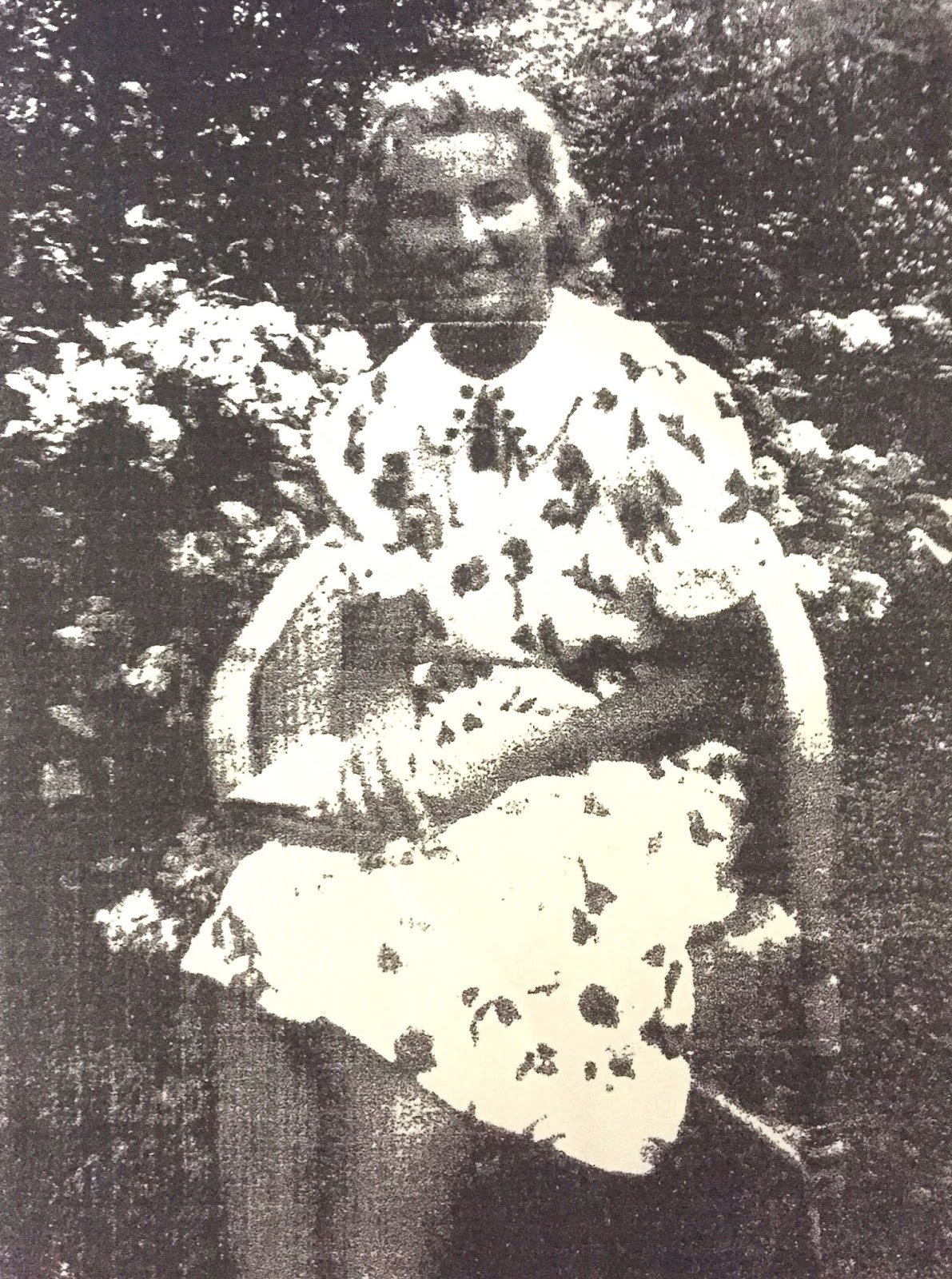
Elisabeth (Lies) Boissevain (1924-2014), during
the war years before she went to prison. Copy of
photo courtesy of Hester Boissevain Grinberg.
In the Chapter on Wally van Hall and the Financing of the Resistance, I briefly mention Elisabeth (Lies) Boissevain Land. Her father's name was Walraven Boissevain.

She was employed before the Occupation as a schoolteacher. During the Occupation, she worked as a courier and secretary for van Hall, the "oil man" (financier) or Prime Minister of the Dutch Resistance.

Wally van Hall found, as the war progressed, he could trust very few people and that is why he looked for help from among his family.

Near the end of the war, in December 1944, Lies was discovered to be working for the Resistance. She managed to flush the key to Wally's office in toilet.

She was put in solitary confinement for five months, but she revealed nothing. Two years ago Lies sent to Hester Boissevain Grinberg (daughter of Bob Boissevain) a poem that describes her feelings as a young child in the prison.

Walrave Boissevain (1876-1944), father
of Lies Boissevain Land.
Hester says that Lies told her a few years ago: "Tell people, especially children, as much as possible - not to forget World War II."

Here is the beginning of the poem Lies wrote in the "Hunger Winter" (1944-45) of the Nazi Occupation of Holland. Any substantial stores of food they could find in Holland, the Nazis sent by train to Germany.

THE DARK CELL
by Lisha Boissevain in August 1987
(About her confinement in December 1944.)

I was locked in a cell,
In a cell without light,
In a cell with a heavy bolt.
I shivered in the darkness,
So wintry, silent and cold.

Arrested by German oppressors,
Who took my country by force,
I sat there in deathly silence,
Locked in by those prison doors.

Only my steps on the concrete floor
Broke the silence and the gloom.
Four steps to the left,
Four steps to the right;
Endless days without light.

How long would they leave me here,
With only water and bread?
How could I battle this fear?
Torture seemed a real threat.
These men would force me to speak.
They had their methods, while I was weak.
Lies Boissevain Land, who died in 2014. She
urged Hester Boissevain to tell the stories of
the war for the next generation.
Four steps to the left,
Four steps to the right.
How should I act?
How should I fight? ...

An interview with Lies Boissevain Land appears here:
https://www.youtube.com/watch?v=oo-wjsPFAx8

The Dutch description of the interview was uploaded on Apr 22, 2011:
Fragment uit het interview met Lies Boissevain (1924-2014). Zij raakte betrokken bij verzetswerk in de betere kringen in Amsterdam: dat van de - later bekende - verzetsfamilie Boissevain, en het NSF (Nationaal Steunfonds) van Wally van Hall. Ze werkte als koerierster en een soort secretaresse. Tot het misging en ze werd opgepakt.

Thursday, February 19, 2015

WW2 | 9. Resistance Banker–Wally van Hall

Walraven (Wally) van Hall, 
"Resistance Banker". Photo 
1943 by Fred KroonZandaam.
A few paragraphs of this post are being retained, to preserve links. The rest is transferred to a private blog site in anticipation of publication. This post was updated on July 22, 2016.

Access will be granted, conditionally, on request to jtmarlin[at]post.harvard.edu or john[at]boissevainbooks.com.

Walraven (Wally) van Hall (1906-1945) was known as the Bankier van Het Verzet and Premier–the "Resistance Banker" and "Prime Minister of the Resistance."

He was assisted in his work by many Boissevains and van Halls, men and women, because they were people he could trust.

Wally's Achievements

Wally and his brother Gijs van Hall succeeded in raising today's equivalent of one billion dollars. He did this in part by counterfeiting guilders and substituting the fake money for real bills in the vaults of the Dutch central bank.

He gave the genuine guilders to Resistance groups and people entitled to pensions whom the Nazi government would not pay at all, or would not pay as much as they were owed.

He also borrowed money from prominent Dutch people, giving them out-of-date stock certificates or one-guilder notes, keeping track of the numbers so they could be redeemed after the war. When the Queen returned to Holland, she repaid every obligation. All the money was accounted for.

We know all this because of the meticulously documented work of the late Dr. Louis (Loe) de Jong (1914-2005). He wrote–in Dutch only, alas–the formidable 14-volume history of the Second World War in Holland.

Dr. de Jong was not given to lavish praise of very many of the Dutch leaders during the war. But because the Nationaal Steun Fonds (National Support Fund, NSF) enabled so many other activities of the Dutch Resistance, de Jong considered Wally to be Holland's most important underground worker during the war.

In his Erasmus Lectures at Harvard in 1988 on the Dutch Resistance, de Jong was careful not to claim too much for Resistance work. He quoted Dutch historian Johan Huizinga as saying: "History, like good sherry, should be dry" (de Jong [1988], 30). However, on the subject of Wally van Hall's stewardship of Resistance funds, de Jong is sweet:
[T]he underground movement in the Netherlands was unique insofar as it numbered one secret organization whose sole task was to collect the money needed to keep all other groups in action and to provide financial support to many of the thousands in hiding. [...] The total expenses of this financial organization alone amounted to [a 1988] value of perhaps $500 million [i.e., more than $1 billion in 2016 using the BLS inflation calculator], and when liberation came, all expenses were accounted for, not a single dime having been misappropriated, and all the people and companies from whom money had been borrowed were repaid by the government (de Jong [1988], 46-47).
Coming from a skeptical historian who is careful with his words, such high praise is astounding.

Source of photo: Philip Stoffels,  https://www.wikitree.com/wiki/Stoffels-29

Walraven van Hall, also called "the Banker of the Resistance", was one of the greatest Dutch resistance fighters during World War II. With inventiveness …

Hall, Walraven "Wally" van, born 10-02-1906 in Amsterdam into an influential Dutch family, as the third child of the banker Adriaan Floris van Hall and Petronella ...

1945: Walraven van Hall, banker to the Resistance. February 12th, 2019 Headsman. Wally van Hall, the Dutch banker, fraudster, and national hero, was ...

Oct 23, 2018 - Barry Atsma, left, and Jacob Derwig portray Walraven and Gijs van Hall respectively in 'The Resistance Banker.' (Dutch FilmWorks/via JTA).

Oct 18, 2018 - Actors Barry Atsma, left, and Jacob Derwig play Walraven and Gijs van Hall, respectively, in “The Resistance Banker.” (Dutch FilmWorks).

Oct 10, 2018 - Because of his banking experience, van Hall was able to provide funding with the help of guarantees by the Dutch government in London.

Rating: 4 - 7 reviews
Sort this monument out after watching the movie of the same name. Located in Frederiksplein Square this fallen life size tree is dedicated to Walraven van Hall.

Monday, January 26, 2015

WW2 | BOISSEVAIN Links (Updated July 23, 2016)


To get back here fast, just type two words in Google: Boissevain WW2.

The outline and links below are designed to facilitate review of my draft book on The Boissevains in World War 2 for editing purposes so that review copies will be available at the Boissevain Family Reunion in April 2016. Chapters are currently of unequal length and the goal is to make them approximately equal. If you have suggestions, please contact the writer–john@cityeconomist.com.

Book Outline with links to Chapters

Introduction 1-2   3   4   5   6   7   8   9  10  11  12
Appendix A–Sources. Appendix B–Walking Tours of Herengracht and KeizersgrachtAppendix C–Walking Tour of 20th C AmsterdamAppendix D–Boissevain Reunion, 2016.

Introduction - Why this book is being written now–before the number of those living today who were alive during the war shrinks to zero. We need them to help identify letters and other source materials and ensure the record is correct. Not everyone in the Boissevain family was a brave member of the Resistance. Even those who never intended to collaborate with the Nazis were tricked or bullied into revealing things that helped the Nazis in their evil work. But the Boissevains and van Halls had more than their share of brave activists. They did things daily for which they could be summarily shot by the SS thugs who ruled them. Many of the people who were bravest said they only did what was expected of every Dutchman. When the Queen in exile said her country was a nation of heroes, the underground papers were silent because they knew that no one was seeking to be a hero, any more than she was when she fled Holland after Rotterdam was bombed, and when heroism meant endangering. It is essential to recognize that for Dutch people none of the possible responses to the invasion was easy. It took powerful determination and a trusted network to defy the crazily murderous Nazi regime and support the Resistance. The most reliable networks were to be found in patriotic families, which were hard for the Nazis to infiltrate–not that there weren't collaborators  inside these families. Secrets were kept even from siblings that could not be trusted.

No one knows when or where this unsought heroism may be needed again.

1-2 The Boissevain Family and Their Homes (Before the Nazis Came). In the 1920s, the Boissevain and van Hall families were well off relative to the rest of Europe. The Boissevains left the Dordogne in France after the Revocation of the Edict of Nantes. They were mostly Huguenot business and professional people who lived around Amsterdam. Holland had been neutral in WWI and prospered after the war; the Dutch expected a blockade as in WWI, and was ready for it, but they did not expect invasion.

3 The Nazi Rise and Dutch Invasion. The Crash of 1929 precipitated a loss of confidence in capitalism that led to the rise of Hitler. Speculators helped create instability that resulted in a global crash, paving the way for Nazi ideologues and other extremists. Hitler had less than 3 percent of the German vote in 1928. He got 18 percent in 1930 and 37 percent in 1932–enough for him to have the largest party in the Reichstag and to declare himself dictator (Führer) when Germany's President died the day after a visit from Hitler. In 1933 FDR nd his Treasury Secretary, Will Woodin, fixed the mess in the USA, but it was too late to save Germany and the world from the Nazis. Dutch businesses dealing with German firms were soon affected. Both Jan "Canada" and Bob Boissevain were in the fertilizer industry. In 1933 Hitler merged the German chemical companies into a single giant, I. G. Farben, and in 1936 various marketplace battles ensued, bankrupting their Boissevain partners, including Charles E. H. and Bob.

4 The First Nine Months–the de Booy Family. Truth is the first casualty of war. From May 1940 to February 1941, the Nazis hoped that by disguising their most evil plans and taking a cousin-to-cousin approach to the Dutch people, they might be widely accepted and even welcomed, as they were in Austria. Goebbels believed in this plan and was angry when he found the Dutch to be "insolent". After the general strike in 1941 following deportation of hundreds of Jews, the Nazis took off their mask of friendliness and treated the Dutch resisters with a brutal response, culminating in the "Hunger Winter" of 1944-45, when what little food was left in Holland was seized and put on trains for Germany. Han and Hilda de Booy's daughter Engelien was married throughout the war to a Jewish man, Frans Polak. The stress of not knowing what would happen to them shows through the letters of Hilda (after whom my mother was named) to her sister Olga (my grandmother).

How Resistance Fighters Organized. After the invasion of Holland,  Resistance groups formed almost immediately. Many were wiped out. The main functions of the Resistance were to (1) Hide and help fugitives from the Nazis, (2) Disseminate information to counter Nazi propaganda, (3) Cause serious harm to Dutch collaborators and SS enforcers, (4) Forge IDs and papers to help fugitives travel, (5) Raise money for all the above activities. Different groups pursued pieces of these missions.

Fight–Armed Resistance–Gi, Janka, Louis Boissevain. CS6 was organized by two sons of Jan "Canada" Boissevain, Janka and Gi. They operated out of the basement of their parents' home in Corellistraat 6. CS6 used to meet in the soup kitchen behind the Palace on the Dam. Janka and Gi are buried with their cousin Louis Boissevain in Plot 33 of the Honorary Cemetery. Their father, who was arrested first, died later in Buchenwald.

Flight–Escaping Holland–Hans de Beaufort. Unlike a country like Norway, whose border extends a long way with neighboring neutral Sweden, there were only a few ways out of Holland and none was easy–via Germany (from the frying pan into the fire), the North Sea (patrolled by the German Navy), and Belgium, also occupied. Early on, a few people escaped to England (the Engelandvaarders) over the water. Gi and Janka got part of the way, but were arrested en route; luckily, their cousin Han de Booy got them released. A route that worked for a long time later was to take a train to Paris, and from there to Switzerland, Spain or other unoccupied country. Charles Boissevain is seeking the recognition of Jean Michel Caubo, who gave his life meeting escapees from Holland in the Paris train station. Hans de Beaufort, son of Teau Boissevain, was active in assisting downed flyers to escape this way, mostly to Switzerland.

Sheltering Underdivers–The Goldbergs and Dr. Vecht. The story of a Jewish family–Leo Goldberg and his wife and one of his three children–and a Jewish dentist hidden by Bob Boissevain and his family–is told here.

Financing the Resistance–Wally and Gijs van Hall. Wally van Hall and his older brother  figured out ingenious ways of obtaining money to support the Resistance. They pulled off maybe the biggest single bank robbery ever, worth perhaps half a billion dollars in today's money, replacing real bank notes with forged ones and giving the real money to the Resistance. Wally is buried in Plot 35 of the Honorary Cemetery and also has a separate monument to him in the square opposite the Nederlands Bank in Amsterdam.

10 Other Family Members. What they did is not always clear because they were shot or died in concentration camp.

11 Underground Papers–H[ilda?] van Rijnbach. Many family stories are told of informal communications through carbon copies of letters, and illegal radios. Passing on news was a very important and widespread activity of the Dutch Resistance. On this matter–getting unfiltered news about the war from the outside world–the Dutch police were prone to turning a blind eye if they could be sure of avoiding reprisals from their Nazi overseers. H[ilda?] van Rijnbach worked as a housekeeper for Hilda de Booy and her daughter Engelien de Booy.

12 After the War–Awards, Joys, Tragedies. Awards went to family members from Yad Vashem, the Dutch Government and other governments. The Goldbergs' story (Chapter 7) has a happy outcome for the three who were hidden by Bob and his family and two other children who were not. The daughter who was hidden, Anya (Anna Ormont), emigrated to Canada; another daughter stayed in Amsterdam; and a third child, Max, went to the United States where he prospered and had a son who as of this date has two sons of his own. The postwar story of the fourth guest in the house, Dr. Jacob Vecht, was much sadder.

Appendix A–Sources
Appendix B–Walking Tour
Appendix C–Boissevain Family Reunion, Amsterdam, April 2016
Dutch Boissevain Website (in English)
Daniel Boissevain (1772-1832) Family Group
Charles Handelsblad Boissevain (1832-1927) Family Group