|
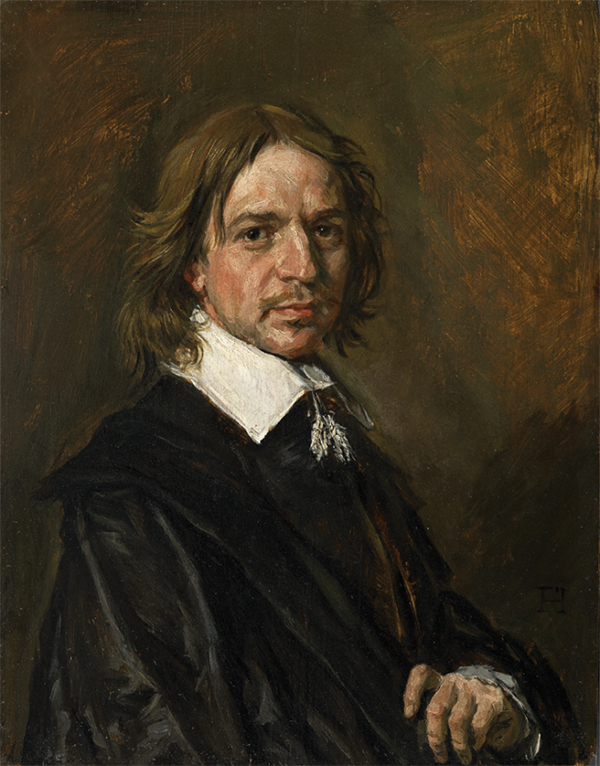
Vincent van Gogh, Self-portrait (L) and Brother Theo (R).
Theo financed Vincent's painting career. Both died much too young. |
March 16, 2015–On this day in 1901, Vincent van Gogh's paintings were shown at the Bernheim-Jeune Gallery in Paris, his first major show–11 years after he died–with 71 paintings in the show.
The exhibition made it easier for other avant-garde painters to exhibit, like Gauguin and Matisse in the coming years.
Garrison Keillor tells this story today in
The Writers Almanac, and says that van Gogh sold only one painting in his lifetime. That perspective is repeated many times
on the web. It needs to be challenged:
- Dealers often buy paintings and hold them until the marketplace catches up with the dealers' estimate of the paintings' value.
- The quality of van Gogh's art was well recognized by other artists and dealers during his lifetime.
- Vincent's brother Theo–his brother and an art dealer–gave him money to live on and to buy art supplies with.
- Even though Theo was an art dealer, historians describe the money he gave to Vincent as charity. Why?
- When Theo gave his brother money and at the same time took possession of the paintings, he was buying the paintings.
- Theo invested so heavily in Vincent's expensive art materials and provided enough cash for living expenses that Vincent could not be described as poor.
The full story of Vincent's and Theo's relationship is emerging as van Gogh's letters are transcribed, translated, indexed and made available
by the Van Gogh Museum. The details of Vincent's and Theo's finances are becoming easier to follow:
- Yes, The Red Vineyard, now rated the most valuable painting in the world after the Mona Lisa, did not sell until the year before Vincent's death.
- But before that he did sell a lot of his art–and the relatives who purchased it were connoisseurs.
- As mention, his art was greatly appreciated by other artists.
- Theo's charity could be considered an investment in Vincent's art.
- The detailed financial records now available do not show Vincent to have been poor.
If poverty means you don't have money to spend, Vincent van Gogh was not poor. He was often broke, mainly because he denied himself little:
- He spent freely on the materials for his art–paints, canvases, sketching supplies – in addition to the materials that Theo purchased for him at his request in Paris.
- On an impulse he purchased 21 volumes of The Graphic.
- As needed, he paid money for models–in 1882 he was paying his model Sien one guilder per day.
- He moved to where he felt inspired, and purchased what was required to settle in. When he moved at the end of his life to a rented house, the "Yellow House", in Arles he purchased 12 chairs for it.
- He spent money daily on self-indulgences like coffee, tobacco, alcohol, prostitutes (at two francs, F2.00, per visit, sometimes F3.00). [Letters 304, 659, 699, 677 on the Van Gogh Museum Letters website.]
Vincent Sold His Art
Vincent did sell his art to his relatives, who were experts and dealers in art. Theo claimed the right to buy and sell Vincent's art. Vincent had a background in art pricing and he estimated the value of his art highly:
- Three children of the grandfather of Vincent and Theo van Gogh, also named Vincent, became art dealers.
- Vincent's Uncle Cor commissioned 12 pen drawings from Vincent for 2.50 guilders ($20) each, i.e., for $240.
- Theo interpreted his willingness to pay Vincent as part of a dealer's bargain with his client. “I regard the money I give him as payment for his work,” he told Mrs. van Gogh in 1885. We should take him at his word. [Letter 442.]
- In April 1888 Vincent wrote that he valued his best paintings at F1,000 each (about $4,000). The art world eventually met and streaked passed Vincent's own estimate of his paintings' worth.
- Vincent van Gogh had a short career as an artist – he started late and died young. This affected his ability to build up a reputation as an artist during his lifetime. But it also meant his art had scarcity value after he died. If he had lived longer his art would surely have appreciated in value during his lifetime, but an individual painting might not be so valuable today.
Theo Was an Investor
Theo was well positioned in this business, dealing in the 1880s with Oscar-Claude Monet, Camille Pissarro, Edgar Degas, Henri de Toulouse-Lautrec, Paul Gauguin, Emile Bernard, Paul Signac, and Louis Anquetin. When in 1888 Theo sold Gauguin’s
Breton Women Chatting for F600, about $2,400, it showed a strong demand for the work of the painters that Theo represented.
Theo valued his brother's paintings and was well-informed about the art market, enough to know how and where he would sell Vincent's art in due course. Theo surely had every intention of making money from them. He didn't expect that first Vincent and then he would die very young. For him, investing in his older brother was an investment in a long-term, appreciating asset.
The money Theo gave to Vincent wasn't a large percentage of his income and was not, for the most part, a great burden. Theo gave money to his brother affectionately and without any evidence of reluctance. I believe Theo's attitude is that he was investing in Vincent and was willing to wait for a return. Theo must have felt that, taken as a group, he and his clients couldn't lose by investing in his stable of artists. In retrospect, he was absolutely right. He might have even suspected that his brother's art would one day command a higher price than the art of any of the others.
From the letters, it does look like a beggar-to-donor relationship. The reason Vincent wrote so many letters to his brother Theo is that Theo happened to include money with so many of the ones he sent to Vincent. Vincent’s request “Write to me soon” was often a euphemism for “Send me money quickly”. When Vincent writes “Thanks for your letter”, the context suggests: “Thanks for the remittance”.
[See Letter 204 on the Van Gogh Museum Letters website.]
La reconnaissance de la plupart des hommes n'est qu'une secrète envie de recevoir de plus grands bienfaits. (Often translated loosely: “Gratitude is the lively expectation of favors yet to come.”) - François de La Rochefoucauld
I don't think this detracts from Theo's generosity. But it does undermine the idea that Vincent never sold any paintings. His brother Theo was implicitly buying them, one by one, on consignment.
The P&L of Vincent and Theo, 1872-1890
I'm not basing my contrary perspective on a hunch, but on the letters of Vincent and Theo about their yearly profit and loss.
1872. Vincent's first recorded job appears to be at the Goupil & Cie gallery in The Hague at 18. At 19 years old he wrote a letter to a client about a visit in October 1872 to the W. P. van Stockum antiquarian bookstore and auction house, where art was apparently auctioned as well as books. It is family lore, passed on to me by my mother Hilda van Stockum, that Theo worked for the W. P. van Stockum firm, perhaps as what we would call today an "intern". Vincent may also have started working there. The experience they both would have gained would help explain why Vincent and Theo were hired at a very young age doing sophisticated
work for firms based in Brussels and Paris. They must have made a name for themselves as knowledgable about art and about auctions. The van Stockums were well known in the Hague and both Vincent and Theo knew Willem Jacob van Stockum, after whom my uncle was named. He married Carolien Haanebeck, a van Gogh relative. The van Gogh family was well known in the book and art business, but not so much in the Hague. [Letter 001a.]
1873. Vincent earned a good salary in 1873 - 50 Dutch guilders per month in 1873, roughly $400. Theo, four years younger, was paid 38 guilders a month.
[FR b2683.]
1876. Both brothers passed on part of their salaries to their parents. When Theo was given a raise and a bonus of 15 guilders ($120) in 1876, he donated some of it for his sister Willemien’s education.
[FR b2225-6.]
1879. Vincent lost his job with the art gallery and his replacement jobs were poorly paid - instead, he became a paid evangelist, starting in January 1879, doing Bible readings, Sunday School and visiting the sick. His pay in Belgian francs was BF50 a month, of which he paid out in turn 60 percent of it on rent.
[FR b2456-b2457.]
1880. In June, Theo’s support of Vincent is first mentioned. "I learned at Etten that you had sent 50 francs for me; well, I accepted them. … [W]hat else can one do?” His parents also contributed to Vincent's expenses occasionally - in June they sent him a parcel of clothes and F60. In October, when Vincent went to live in Brussels, Rev. van Gogh, his father, sent him BF60 (Belgian francs) a month, of which BF50 was spent on his lodgings.
[Letters 155 and 160 and FR b2494.]
1881. Theo’s income rose in 1881 when he was put in charge of the Goupil branch on the Boulevard Montmartre. His father was pleased that Theo could make a bigger financial contribution to the family: "It is really very kind of you to want to pay part of Vincent’s expenses.” Vincent in April 181 was told by his father of Theo's generosity and he said: "I heard from Pa that you’ve already been sending me money without my knowing it, and in doing so are effectively helping me to get along. For this accept my heartfelt thanks." Later: "I damned well hate having to give Pa an account of every penny."
[Letters 164, 192, FR b2235.]
1882. The remittances were regularized and were linked to Vincent's living expenses. From June 1882 Theo sent money three times a month on or around the 1st, 10th and 20th of the month. For Vincent these remittances were "most welcome". Sometimes it was F100 ($400) a month, sometimes F150 ($600), nearly ten times what a factory worker was paid in 1870 to support a family of seven. In 1880 a good seamstress earned only about 6 guilders ($48) a week, and a laborer around 10 guilders ($80). The Dutch poor relief gave mothers a maximum allowance of 1.50 guilders ($12) a week, plus bread.
[FR b1706]
1883-1887. Vincent paid 14 guilders ($112) a month rent in The Hague in 1883. He preferred having his payments from Theo spread out because that reduced the chance that he would run out of money too soon. With the exception of the years when he was living with Theo in Paris, and in Saint-Rémy, the payments were made to Vincent monthly.
[Letter 234.]
1883. When Theo fell in love with Marie in 1883, he also started supporting her. Later, he increased his spending on his wife Jo and the infant Vincent Willem.
[Letter 394.]
1888. Theo reassured his elder brother not to worry about debts: "You talk about money that you owe me and and that you wish to pay back to me. I know nothing of that.” Why not take him at his word? He kept track of his spending so that later he would have a basis for claiming ownership of some of the paintings he acquired. Others he might sell and just keep the dealer's commission.
- In Arles, the sums paid to Vincent rose considerably, to about about F2,300 ($9,200) between his arrival on February 20 and and Gauguin’s at the end of October.
- Theo also paid for much of the paint and canvas that Vincent needed. He appears to have promised Vincent F50 a week. When Gauguin was visiting, the five remittances were for F100 ($400), plus an emergency payment of F100 before that, so the total from the end of February to the end of 1888 was F2,900 ($11,600), about what Vincent seems to have spent on furnishing the Yellow House.
- The F250 ($1,000) a month he had to spend compares favorably with the F135 ($540) a month that his friend the postman, Joseph Rollin, had to feed his family of five.
- From May 1888 on Vincent spent F30 ($120) a month for his hotel and F15 ($60) a month to rent the Yellow House as a studio.
- He ate his meals in a restaurant for F1.50 ($6) a day.
- In May-September he paid F90 ($360) a month for bed and board (excluding the bar bill). That fell to F60 ($240) a month in the Yellow House.
- The cleaning woman was at first paid F4 ($16) a month, which rose to F20 ($80) a month when Gauguin was staying there.
- So Vincent had F100 ($400) over for the rest of the month and F130 ($520) when he moved out of the hotel.
- Vincent ordered his paints and canvas from Paris, through Theo, who therefore paid the bills. Vincent occasionally purchased canvas and stretchers. The latter cost F1.50 ($6) or less each, depending on the size and frames , which cost about F5 ($20) each. [Letters 592, 676, 681, 683, 713, 736, 738, 762.]
1889. In 1889 Vincent wrote: “You’ve given it [money] back to me several times over, both by your work and by a brotherly affection.” In January-May 1889, Vincent paid F21.50 ($86) a month for the Yellow House, renting two more rooms. He also bought a black velvet jacket for F20 ($80), a suit for F35 ($140), and six pairs of socks for F4 ($16). He spent F25 ($100) to install gas in the Yellow House so he could work at night. For Vincent’s one-year incarceration in Saint-Rémy from May 1889, and his stay in Auvers-sur-Oise from May-July 1890, Theo paid F3,310 ($13,240). Vincent's time in the asylum in Saint-Rémy cost F100 ($400) a month. Theo itemized his income and expenditure for 1889, reserving F250 ($1,000) a month for Vincent. That year he also gave his mother F1,000 ($4,000) and Willemien and Lies F678 ($2,712. Vincent felt guilty about Theo’s expenses. In May he wrote: "The money that painting costs, that crushes me under a feeling of debt and of cowardice, and it would be good for that to stop if possible".
[Letters 669, 709, 760, 767 and FR b2206. Account book, 44-45.]
1890. In March 1890 Theo sold Vincent’s painting
The Red Vineyard to Anna Boch for F400 ($1,600). The painting today is rated the second most valuable in the world. This price was a fraction of the cost of Vincent's painting materials in the 13 months starting in June 1889, as Vincent was filling many canvases with some of his best work. "Vincent’s account" lists slightly more than F900 ($3,600) for materials supplied by the firm of Tasset & L’Hôte, and nearly F400 ($1,600) for Tanguy. Theo meanwhile signed a favorable contract with Boussod et Valadon in August 1890. It was backdated to take effect from 1882, perhaps creating what we call today a “signing bonus.” Theo was paid a salary of F4,000 ($16,000) a year, with a bonus of 7.5 percent of the net profit of the branch he managed, which for 1882-90 came to more than F8,000 ($32,000). So in 1889-1890, he was paid about F12,000 ($48,000) per year. From this Theo paid Vincent an average of less than F2,000 ($8,000) per year, i.e., less than 16 percent of his income. Theo also sent money home to his parents, and thus contributed to the upbringing of his sister and his brother Cor.
[Letter 855, Account book 2002, pp. 44-45, 139.]
Without discounting Theo's love of his brother, there is no need at the same time to assume that his support of Vincent was strictly charitable. He knew quality paintings and he knew he was getting value for money. So the talk about "only one painting being sold" omits the fact that so far as Vincent was concerned his work went right out into the hands of a friendly art dealer, who gave him enough money to support himself well.
Vincent van Gogh Letters Search: