Showing posts with label World Trade Center. Show all posts

Monday, June 1, 2020

TECH INNOVATION | Three Rays of Hope

June 1, 2020—The Business Incubator Association of New York State (BIANYS), a nonprofit trade association, was established in late 2005 and serves both as a meeting place for incubator professionals, including operators of accelerators and co-working spaces. It started with a biotech focus and now covers a broader spectrum of 100 tech-innovating incubators in all parts of the State. The 2020 Annual Meeting earlier today focused on adapting to the coronavirus. John Tepper Marlin, chief economist for three New York City Comptrollers and former senior economist in two sessions of the Joint Economic Committee of the Congress, was invited to talk about the economic impact of past disasters and paths back to normalcy. Here are his remarks earlier today:
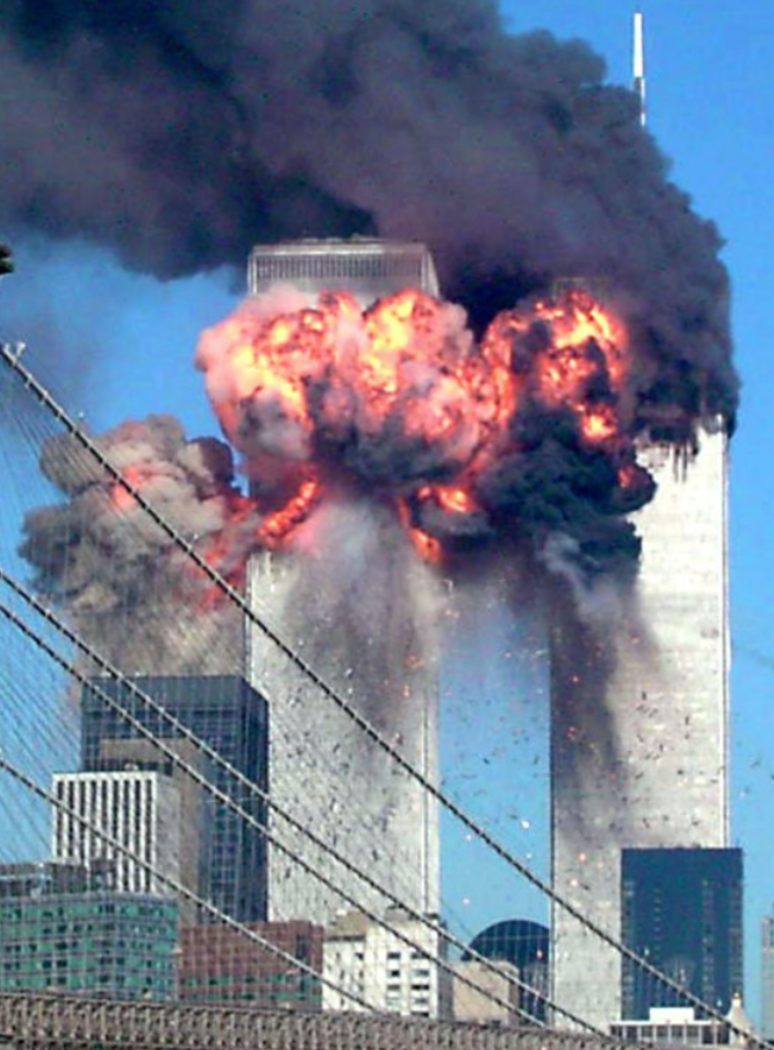
9/11
Disasters take a huge toll on the national and state economies. But there are paths to recovery and these paths are evident now.

Terrorists struck New York City’s World Trade Center twice, in 1993 and 2001. The New York City Comptroller’s office prepared both estimates of the economic impact and I was the chief economist on duty in both cases. In 2001 the office's estimate, prepared within two weeks of the event, was close to $100 billion. This estimate was the basis for a $20 billion package of aid from the Federal Government.

A Kansas twister.
If our future looked bleak after the 9/11 attacks, the outlook is in many ways bleaker now. The Covid-19 pandemic affects the entire country, with 105,000 deaths so far. President Trump’s having shut down the Bush-Obama pandemic preparedness program contributed to this country’s having suffered more than one-fourth of world-wide deaths. The national May unemployment rate to be announced Friday morning is likely to approach or exceed 20 percent, nearing the highest rate of  the Great Depression. 

The high rate is likely to persist, because two months after our economic shutdown, more than one-fourth of the U.S. workforce has applied for unemployment insurance. By late June the eight-week PPP limit for forgiveness of an SBA loan will expire for first borrowers. No one should be surprised that some people in a country on edge have been all too ready to give the President what he seems to have been looking for, deadly confrontation on urban streets. 

High hopes, on the way to the City.
Ray of Hope 1. Washington will have to help with money and, eventually, leadership. Only the national government can afford to pay for major disasters. Even if a twister is only in a single state like Kansas, Washington helps out, because the national government effectively reinsures the states. During a pandemic, when human lives are at stake everywhere, the cost of the response must be put to one side. When the reckoning comes, Washington must play a big role. Why should Kansas “bail out” New York? Because: 

  • If New York City fails, the United States loses its biggest economic engine. 
  • As Governor Cuomo often observes, New York State sends many billions of dollars more to Washington every year than it gets back. New York “bails out” the rest of the country annually. 
  • New York State was the hardest hit because we are the gateway from the rest of the world. 
  • Only the Federal Government can print money and issue virtually costless debt, especially since the imposition of the cap on the SALT deduction in 2017.
"If I only had a brain."
The country desperately needs a better disaster preparedness brain in Washington. Governor Cuomo’s regional coalition of states is a brilliant temporary substitute. Disaster preparedness must not depend on which party or which official is in charge. It could be headed by a board nominated by the White House, Congress, National Governors Association and nonprofits dedicated to disaster relief.  My first hope is that analytical tools are being generated now by today’s startups that will allow us to respond faster and better in future. 


The cowardly lion.
Ray of Hope 2. Disasters cause lasting trauma. But the causes and becoming better understood.  Most vulnerable are young people, front-line workers and those who suffer from business interruption. Trauma in a disaster affects workers, their families and even onlookers. State and local front-line staff such as police, fire fighters, teachers and health care workers are under high stress in a   disaster. In financial disasters, the victims may be owners of declining financial assets. Shock suffered by survivors and even remote observers is serious and can be long-lasting. Recent estimates of the impact of the coronavirus suggest that the impact extends to one-fourth to one-third of the population with measurably serious increases in levels of anxiety and depression. Young people whose career paths are interrupted are at risk. So are  business managers faced with closure of their stores or hospitality centers. Huge office buildings in Westchester and Northern New Jersey testify to fears among businesses headquartered in Manhattan that they would have to leave after 9/11. Mayor Michael Bloomberg’s great contribution to New York City was to restore faith among business leaders in New York City's future. In the 2020 pandemic, the dominant uncertainties include the future of bars, restaurants and retail stores; the shift in consumption from physical stores to online purchases; and fear of acquiring illness on public transportation. For problem-solving startups, the ray of hope is in developing new design approaches to spaces so that the public has confidence in returning, or new software apps that allow transactions to be conducted entirely in advance. This will hasten safe reopening. 

"If I only had a heart."
Ray of Hope 3. Tech systems have become the heart of American commerce and industry. Disasters pose special tech ricks for businesses. They are being tackled one by one. Risk managers know that tech assets are increasingly where values are concentrated. Large businesses have  multibillion-dollar IT investments, which have become more valuable than the buildings in which they reside. Businesses are properly concerned to back up their data and avoid getting hacked. Back-up systems in the World Trade Center were sometimes in the same building, so the backups were lost in the attack. Putting the NYC emergency command center in one of the WTC buildings was a concentration of risks that many spotted. Broad-based “cloud” storage promises more security, but we don’t know how well it will survive a cyberattack on our electrical grid or a bomb planted by a terrorist. Making our web storage vandal-resistant is a key opportunity for startups. While startups are fragile and at special risk when financing dries up in a disaster, those that survive will find many opportunities awaiting them. Competitors seek to merge and buyers will find fewer vendors in the same space.

To sum up:

  • The country needs tech startups that address our lack of preparedness for  disasters. Opportunities abound for innovation in meeting the specific disasters before the country now, and others that are predictably in our future.
  • Incubators and accelerators make a great contribution by helping to form teams, to advise on project planning, to connect with expertise, and to enable startups to bridge the gap between ideas and financing.
  • Because incubators process many startups, they increase the probability in a risky environment that at least some of the investment in new ideas will come to fruition. They are therefore a good bet for foundation grants, angel investors and government loans and grants.


Monday, January 1, 2018

ECONOMIC IMPACT OF 9/11 | Health Effects and the Zadroga Act

The Destruction of the Twin Towers Resulted in
Injuries that Took Time to Reveal Themselves.
You probably know that in contrast with prior wars, the continuing war in the Middle East is creating relatively many more injured soldiers. The medical and human costs of their injuries have been high.

The health effects of the attacks on the two World Trade Center Towers seemed more like earlier wars. Three thousand people died, and few people reported to the hospitals with visible injuries. Those who were burned or buried by the Towers, including many NYPD and NYFD rescuers, mostly were killed in seconds or minutes. 

The hospitals were all standing by after the 9/11 attacks, but they had little to do compared with expectations. Few injured people survived to take to the hospitals. 

In fact, the rescuers did suffer illnesses and injuries, but in most cases they took months to show themselves.

I am interested in this subject because in the aftermath of both the 1993 and 2001 attacks on the World Trade Center, as Chief Economist for the New York City Comptroller, I was asked to assess the economic damage caused by the attacks. I maintained then, and still believe, that there would be a long tail to the indirect economic effects of the attacks. This would be consistent with the impact of recent wars in the Middle East on the American military.

The Rousmaniere Study

My friend Peter F. Rousmaniere (pfr@rousmaniere.com), a risk-management professional who writes frequently on occupational risks, studied the problems of the surviving World Trade Center workers and rescuers. He tallied the problems they faced in seeking compensation for illnesses they contracted that they believe are attributable to the conditions under which they worked at the WTC site.

Rousmaniere's study was published in 2007 as four award-winning articles, under the title "Up in Smoke", in Risk & Insurance Magazine, a leading business publication. The articles identified three independent failures in handling compensation:

1. Safety Enforcement at Ground Zero Was Poor. Enforcement of safety was well below recognized standards, even after making allowance for the scale of the challenge. It was long after September 2001 before officials formalized even a basic safety plan.

2. No One Monitored Workers' Health. Even though it was well known that rescue workers were vulnerable to slowly emerging diseases, their health and exposure was not monitored – by employers, insurers or the City of New York. This failure greatly increased the uncertainty today about the health status of tens of thousands of workers. It is axiomatic that workers exposed to high levels of toxic materials should be monitored regularly for their health status. The only workers who were monitored carefully were New York City firefighters. Tens of thousands of workers were allowed into ground zero in September 2001 and the weeks following without any check on their existing health status, which makes it difficult to do a before-and-after analysis. There was an inadequate attempt to check up on them soon afterwards. Confusion today about the actual health status and prognosis of these workers can be directly linked to the absence of medical surveillance from the start.

3. The Workers Compensation System Collapsed. The State system was inadequate as a provider of medical and disability support, which inflamed demands for support from the Federal Government and through judicial awards. The workers compensation system of New York was created in part out of reaction to the 1911 Triangle Shirtwaist fire. Since then, the system has restricted access to persons who acquire diseases at work, such as lung conditions and post-traumatic stress disorders. Substantial numbers of World Trade Center workers have symptoms of these diseases. Workers compensation law is expressly designed to frustrate claims arising from disasters except from those whose full-time work is emergency response. Not until 2006 was the law amended to give these workers fairer access to benefits.

Rousmaniere's Proposals

Rousmaniere drew several lessons from his study of the handling of worker compensation for World Trade Center workers, and made three proposals:

1. Define Who Is in Charge of Disaster Sites. In advance of emergencies, a plan should identify organizations and leaders who have the resources, knowledge and training to carry out the response. New York City in 2001 prided itself on its readiness for emergencies. But its expensive emergency center was in the World Trade Center itself and was destroyed. It missed basic steps. The Federal Government responded slowly and inadequately. If a professional New York City failed, what hope do other cities have of responding on their own?

2. Install a Federal Medical Monitoring System. The system should take in all workers responding to emergencies.

3. Create a Federal Program to Compensate Disaster Workers.  Legal barriers to benefits from the state workers compensation systems exist in most states.

Rousmaniere concluded that in the absence of these actions, the price in death and disability among workers responding to a pandemic in the future may be high. Workers might otherwise not respond in future with the dedication that they showed after 9/11.

The Zadroga Act

Senator Bob Menendez and Congresswoman Carolyn Maloney initially co-sponsored the bill that became the The James Zadroga 9/11 Health and Compensation Act. The bill failed to pass in 2006, but a modified version (after Rousmaniere's articles were published) passed both houses in 2010 and was signed by President Barack Obama at the beginning of 2011.

The Zadroga Act provides both health monitoring and financial aid to first responders, volunteers, and survivors of the September 11 attacks. It is named after James Zadroga, a New York Police Department officer whose death was linked to exposures from the World Trade Center disaster.

The law funds and establishes a health program to provide medical treatment for responders and survivors who experienced or may experience health complications related to the 9/11 terrorist attacks.

A reauthorization bill, sponsored by Senator Kirsten Gillibrand and Congresswoman Carolyn Maloney, passed in 2015, with coverage extended to 2090. In 2016 the first compensation was paid under the Zadroga Act for World Trade Center emergency workers.

To subscribe to this blog, or its comments, or to search its contents or to forward a post using G+, see the options at top right.

Friday, February 26, 2016

TERRORISM | Feb. 26–First WTC Attack, 1993

February 26, 2016–Today in 1993 a massive explosion occurred in the parking garage underneath the World Trade Center in New York City.

At that time I was working for the New York City Comptroller as Chief Economist and the first I knew of the destruction was the large number of police and fire vehicles headed south.

I heard the sirens as I was leaving for the airport on Friday evening for a vacation with my family and parents-in-law in Florida.

Six people died in the explosion and another thousand suffered injuries. When I got to Florida I was contacted about estimating the economic impact. I returned early, on Sunday, and started making estimates based on reports that were coming in on the damage to the cars in the parking lot, insurance claims, the damage to the building, the impact on security and the overall impact on the outlook for the New York City economy and tax revenues.

Meanwhile, investigators at the bomb scene found a section of a van frame that had been at the center of the blast, with the vehicle identification number still legible. Detectives interviewed the Ryder Rental Agency in Jersey City, which gave the renter as Mohammed Salaamed, who reported it stolen on February 25. Someone named Salameh in the FBI database as a potential terrorist. The renter returned to Ryder to get back his $400 deposit and when he came to collect it, the FBI was waiting to arrest him. His notes led them two other suspects.

One of the terrorists was found to have bought hydrogen tanks from AGL Welding Supply in New Jersey and three tanks marked “AGL Welding” were found at the site of the bomb.

The owner of a storage facility in Jersey City reported he had seen four men loading a Ryder van on February 25. Sure enough, investigators found enough chemicals there, including nitroglycerin, to make another bomb, along with videotapes on bomb-making that led to a fourth suspect. Each of the men was sentenced to 240 years in prison.

These terrorists did not bring down the World Trade Center because the force of the bomb was taken by the first of the steel pillars, protecting the next in line. Repairs were expensive but the buildings stood.

A World Trade Center Property Risk Report, prepared for Silverstein Properties in anticipation of the WTC lease (Source: www.nistreview.org, FOIA request.), asserts (p. 29) that the Maximum Forseeable Loss from another terrorist act would be five weeks' rent:
The 1993 terrorist bombing of the WTC resulted in a maximum forseeable property loss. This event shut Tower 1 down for 6 weeks and Tower 2 for 4 weeks. The explosion, that occurred in the garage area of B-2, caused portions of the Plaza and two Subgrade floors (about 4 bays by 4 bays) to collapse on to the B-6 level damaging mechanical and electrical equipment of the Chiller Plant. As large a blast as it was, there was negligible structural damage done to structural members. Damage was limited to the replacement of these concrete floors, repairing spalled concrete where reinforcing steel had been exposed and rebuilding non-bearing walls.
The magnitude of this type of MFL loss can be estimated at 5 weeks rent or 1/10th of the $364m annual rent or $35m. Plus property damage to the building from the 1993 incident is estimated to be $175m and equipment damage of $120m or a total of $330m.
On the subject of the possibility of an aircraft striking one of the towers, the scenario was considered "highly unlikely".
In 1946 a military aircraft struck the Empire State Building. Since that time the manner in which aircraft are "controlled" has dramatically changed. In the event [of] such an unlikely occurrence, what might result? The structural designers of the towers have publicly stated that in their opinion that either of the Towers could with stand such an impact from a large modern passenger aircraft.
The ensuing fire would damage the "skin", in this scenario, as the spilled fuel would fall to the Plaza level where it would have to be extinguished by the NYC Fire Department. The replacement of the "skin" is estimated at 35% of the building replacement value or $420m. Loss of rents for 1 year or $150m for a total estimate of <$600m.
For MFL (maximum forseeable loss) determination methodology, see page 88 of the pdf.
On September 11, 2001, the World Trade Center was again attacked. The damage was approximately 100 times greater than the impact of the 1993 bombing.

Monday, November 16, 2015

LOSS | Terror Attacks – Paris vs. 9/11

The Physical-Human Losses to Paris Were Smaller than to NYC
 on 9/11, but Economic Losses May Be Greater Relative to Size.
November 16, 2015–As the chief economist for two different New York City Comptrollers in 1993 and 2001, I was required to prepare official numbers for the economic loss to New York City of both of the terrorist attacks on the World Trade Center.

A colleague has asked me – "How do the economic losses from the Paris attacks compare with the New York City numbers for 9/11?"

NYC,  2001. Business leaders in New York City were fearful after both attacks.
  • In 1993 it had been comforting that the attack could be dismissed as "the gang that couldn't shoot straight" because the explosives did relatively little damage to the World Trade Center (one post protected the next) and the driver of the rented truck used in the bombing tried to get back his deposit! He was of course quickly apprehended.
  • In 2001, it was 100 times worse. The cost of higher insurance premiums and deductibles in 2001, the cost of installing new security protections in offices and residences all over New York City and alternative sites in suburban areas, was far greater. That doesn't take into account the national response of launching a military attack on Iraq. The first official estimate in 2001 of the economic loss to New York City of 9/11 was made within two weeks. It was in a range of $95 to $105 billion, approximately 100 times the economic impact of the 1993 attack. 
The first estimate was made when the loss of life from the World Trade Center alone was believed to be close to 6,000 people. The approach was to estimate the one-time loss of buildings, property and lifetime earnings of people who were killed, and then to add to this the present value of adverse business-location decisions.

Within three months, by the end of 2001, the business consensus on the economic impact settled at about $80 billion, about 8 percent of NYC's current gross product.  The drop in the economic impact estimate occurred because:
  • As more survivors were identified, the estimate of the number of dead was lowered from 6,000 to 3,000 (including deaths from the Pentagon attack and all four crashed planes).  
  • Early on, the fear was that many businesses would relocate to New Jersey and Westchester County. In fact, many large companies acquired alternative office space in these areas. But few moved out.
  • With the election as Mayor in November of a successful member of their own fraternity – Michael Bloomberg – business leaders believed that their fears would be addressed fully and competently.
Paris, 2015.  The threat to Paris and to France from terrorism is greater than in New York City and the United States:
  • France is more dependent on Paris than the United States is on New York City. The NYC metro area accounts for 8 percent of U.S. gross product, whereas Paris accounts for one-fourth of French gross product. 
  • France is much more dependent on tourist revenue than the United States, and Paris is the main gateway.
  • The $17 trillion U.S. economy has well-monitored borders with Mexico and Canada and has invested heavily in Homeland Security. The less-than-$3 trillion French economy must cope with borders – in places porous – with Belgium, Luxembourg, Germany, Switzerland, Italy and Spain, not to mention the high volume of traffic to and from Britain. France has reportedly  suspended its commitment to the Schengen Agreement on open borders, which will entail new costs.
On the other hand, the regional and national alternatives to NYC for large American businesses are greater than for businesses in Paris that wish to remain in a francophone environment. It would probably be harder to pull up stakes from Paris and move to a suburban location or another French city because Paris uniquely dominates France, as London dominates Britain.

Based on these considerations, the Paris of the Hebdo and November terrorist attacks could add up to an economic loss for Paris less than but approaching the percentage estimated for the 9/11 attacks. The 8 percent figure applied to the metropolitan Paris economy would come to nearly $6 billion.

The USA and France.  The attack imposed large costs on the Federal Government – on the Federal Reserve System to fund the liquidity crisis immediately after the attack as well as a $20 billion commitment of grants and loans by the Federal Government to compensate New York City for losses in what was properly considered an act of war.

The cost of the damage to New York City was also spread to the rest of the country via private insurance payouts (insurers were not allowed to hide behind Act of God or Act of War clauses) and higher insurance premiums,

An interesting 2010 article in the journal Peace Economy, Peace Science and Public Policy by USC and Claremont economic professors Adam Z. Rose and S. Brock Blomberg, “Total Economic Consequences of Terrorist Attacks: Insights from 9/11”, concludes that the initial economic loss to the USA from 9/11 was at least $75 billion, or three-quarters of a percent of GDP.  This is not necessarily inconsistent with the New York City number because migrations of businesses out of New York City within the United States would not be a loss to the United States, so the national number could well be smaller than the local number at the center of the attack.

The authors make an important point that was always clear to me, namely that psychological factors are crucial for determining the ultimate economic loss from an attack. As they say:
[W]e, rather than the perpetrators, are the major determinant of the consequences of a major terrorist attack. After 9/11, our resilience was high, but so was our fear [... ]. [S]ubsequent anti-terrorist initiatives at home and abroad were more costly than the direct damage caused by the attack.
The United States has invested $650 billion since 2001 in Homeland Security. The French commitment before the latest attack was a little more than one-thousandth of that. France will have to spend more, and the United States needs to assist. American concern about terrorism is greater now than it was after the Boston Marathon attack.

Wednesday, December 19, 2012

NYC | Landfill Idea a Mistake?

I have heard it several places - the map of part of Manhattan that was not flooded by Sandy looks a lot like the Manhattan Island that Peter Stuyvesant et al. colonized.

The implication is that the landfill approach was a mistake. So the World Trade Center was taken down from above by terrorists and its landfill has been overrun by Sandy's surge. The two disasters are often linked but not quite in this way.

Now the implication has been posted as a comment on an article on Dutch responses to flooding in Crain's. The article is behind a subscription wall but the comment is not:
  wrote on The Dutch are already building houses that float and are attached to the ground (the seabed-to-be) by anchors. We have a LOT more land here, and can afford to let large amounts of it revert to its natural state.  We'd better start building reefs for oyster beds and planting marsh plants in low-lying areas of New York now rather than waiting for another Sandy, because there will be, not one, but many.  Like it or not, New York is going to return to the boundaries it had in the 1600s, pre-landfill, no point in spending a lot of money and labor trying to deny it. Read more: http://bit.ly/1Or8kCV (limited access).
One reason that the Dutch were over here in the first place is that floods had been taking place in Holland and Belgium and they were looking for places to relocate their people.

Tuesday, October 23, 2007

Why the Safety Net Collapsed for WTC Rescue Workers

[My friend Peter F. Rousmaniere during the past nine months has been studying the problems of World Trade Center rescue and emergency workers in obtaining compensation for illnesses they contracted that may be attributable to the conditions under which they worked. I am interested in this subject because, as Chief Economist for the NYC Comptroller, I was asked to assess the economic damage of the WTC attacks for purposes of obtaining State and Federal aid. I have maintained, then and now, that there would be a longer tail than some have asserted to the economic effects of 9/11. As a risk management professional who writes frequently on occupational risks (last year I posted an interview with him on workers comp in NY State), Peter has been researching how the system has worked out for WTC workers. Peter lives in Woodstock VT, and can be reached at 802-457-9149; email pfr@rousmaniere.com.]

The health problems of World Trade Center rescue, recovery and cleanup workers have been in the news. Now Peter F. Rousmaniere has produced the most comprehensive analysis to date of what actually went wrong. He says there were three independent failures at the local or state levels:

One, the City’s safety enforcement at Ground Zero was poor, well below recognized standards, and inexcusable notwithstanding the scale of the challenge.

Two, employers, insurers, the City and state regulators failed to monitor the health condition of these workers, even though it was well known that these workers were vulnerable to slowly emerging diseases. This failure greatly increased the uncertainty today about the health status of tens of thousands of workers.

Three, New York state’s workers compensation system effectively collapsed as a provider of adequate medical and disability support, thereby inflaming demands for support from the Federal Government and through the courts.

Risk & Insurance Magazine, a leading business publication, is publishing Rousmaniere's articles about his investigation. The first three installments may be downloaded. The fourth and final installment will be published on November 1.

Within a few days after the WTC towers’ collapse, it was clear that those overseeing ground zero had to implement a safety program without delay, using the best resources available in the country. But the City and its contractors in 2001 were failing to enforce basic standards of worker protection. It took well after September 2001 for officials to formalize even a basic safety plan.

It is axiomatic that workers exposed to high levels of toxic materials should be monitored regularly for their health status. The only workers who were monitored carefully were New York City firefighters. Tens of thousands of workers were allowed into ground zero without any check for their existing health status, and there was no attempt to check up on them later. Confusion today about the actual health status and prognosis of these workers can be directly linked to the absence of medical surveillance from the start.

The workers compensation system of New York was created in part out of reaction to the 1911 Triangle Shirtwaist fire. Since then, the system has restricted access to persons who acquire diseases at work, such as lung conditions and posttraumatic stress disorders. Substantial numbers of World Trade Center workers have symptoms of these diseases. Workers compensation law is expressly designed to frustrate claims arising from disasters except from those whose full time work is emergency response. It took the legislature until 2006 to amend the law to give these workers fairer access to benefits.

The lessons from this experience start with the urgent need to place disaster site control in the hands of organizations and leaders who are up to the challenge. A threshold needs to be set above which the Feds should by default be placed in charge of managing a disaster at the earliest feasible moment. The fires currently raging in southern California would be below the threshold, in part because Californian fire fighting agencies have over the years become a national model of emergency response.

Also, the Federal Government should fund and install quickly a medical monitoring system in any disaster in which it is involved. We cannot trust employers, insurers or state regulators to take on this task.

Third, because legal barriers to benefits from the workers compensation system exist in most states, the federal government should assume responsibility of administering workers compensation benefits for disaster workers. There is a sorry history of Washington having to assume workers compensation responsibilities for workforces struck by disease.

If we fail to apply the lessons from these failures, Rousmaniere concludes, we may pay the price in vastly greater death and disability among workers, for instance in responding to a pandemic in the future.

We may also find it harder to recruit emergency workers.