Showing posts with label Hillary Clinton. Show all posts

Tuesday, November 27, 2018

AMAZON AND GM | Trumponomics Takes a Hit

From 20 final cities, Amazon chose to locate in two
states, NY and VA, that voted for Clinton in 2016.
Meanwhile, MI and OH, which voted for Trump,
 are taking the brunt of GM's layoffs.
The following is posted by permission of Dana Chasin, who sent this out as Update 314 to his list, under the title: "An Economy Shifting Gears: What do Amazon's new HQs and the GM Layoffs Portend?" GM's layoffs and Amazon's new headquarters expansions show that Trump's bets on revival of car manufacturing, as opposed to embrace of technology, are not paying off. States that voted for Clinton in 2016 are winning and two states that believed in Trump's promises for manufacturing are losing. Trump's beggar-my-neighbor tariff policies are not helping American manufacturing.

Major tidal shifts and cross-currents underlying the changing American industrial landscape have been on full display in recent weeks. Last month, Amazon announced it was going to base its second headquarters out of both New York and Virginia, promising to bring 25,000 jobs to each. [This is a significant economic victory for two states that voted for Hillary Clinton for President in 2016.]

In an equally important but opposite development yesterday, General Motors announced its plan to eliminate up to 14,000 jobs in five plants in three states and Canada. Three of the plants are in Michigan and Ohio, which voted for Trump after campaign promises to revive manufacturing.

GM's surprise decision has rattled the Trump Administration and Republican leadership, challenging the belief that the economy is running fine on high octane fuel and should continue unfettered.

GM’s announcement comes less than two years after it announced it would add or keep 7,000 jobs in the United States. It translates to an expected loss of 14,700 jobs. The decision comes only a month after GM offered buyouts to as many as 18,000 long-time employees, only 4,000 of whom accepted the offer by the November 19 deadline – 3,000 employees short of its 7,000 target. With the buyout program behind schedule, the decision to idle five facilities did not come as a surprise to many. The Lordstown assembly plant in Warren, Ohio, for example, had gone from three shifts per day in January 2017 to one shift this past April.

The United Auto Workers said it would challenge GM’s decision. If GM still hasn’t reached its 7,000 buyout goal by January, further involuntary cuts are likely.

While the Tax Cuts and Jobs Act (TCJA) of 2017 purported to create record tax windfall for corporations to reinvest, the picture with GM is more complicated. In GM’s case, the TCJA did not account for “deferred tax assets” which the company was able to accumulate due to poor performance predating the Great Recession. These assets allow companies to reduce taxable income, meaning GM had already been afforded a low tax bill for over a decade. The newly reduced corporate tax rate therefore rendered these assets less valuable, forcing GM to take a $7 billion charge against earnings during the fourth-quarter of FY 2017.

Executives expected to see an eventual benefit from the new tax law, but not for years to come. It’s hard to claim that in absence of sizable deferred tax assets, GM would have even used their $157 million in federal savings to support American plants and employees. An October survey published by the National Association for Business Economics reported 81 percent of 116 companies surveyed had not changed plans for investment or hiring as a result of the TCJA.

The tariffs put forward by the Trump administration are another possible contributing factor to GM’s financial troubles. The timeline of the trade war is highlighted below:

June 1, 2018: The Trump Administration ended the exemption of Mexico, Canada and the EU from aluminium and steel tariffs. GM representatives warned the White House that these tariffs would drastically hurt the firm, saying that “this could still lead to less investment, fewer jobs, and lower wages for our employees.”

July 25, 2018: GM was forced to reduce its profits forecast for 2018, tanking stock by 4.6 percent. GM’s CFO predicted the original tariffs in March and the ending of exemptions to the US’s most trusted partners in June could add “as much as 700 million to GM’s costs” for FY 2018.

September 24, 2018: The White House compounded the problem by unveiling a new, stringent set of tariffs on Chinese automotive exports, putting in place a 10 percent levy on brakes, car batteries, tires, etc. Analysts predict these new tariffs will lead to higher sticker prices for cars and lower car sales. GM, like all other US car manufacturers, relies on foreign-based subsidiary plants and goods to create finished products, making broad tariffs doubly damaging to an already wounded industry. With GM historically leading the way in moving jobs to Mexico and a less favorable domestic/international tax rate differential introduced in the TCJA, the Trump administration's tariffs have only produced escalated offshoring.

Starting on the campaign trail, President Trump made a series of promises to the American people about jobs, specifically jobs in manufacturing. During a speech in Michigan in October 2016, Trump promised to “bring back ... jobs” and said “the long nightmare of jobs leaving Michigan will be coming to an end.”

He blamed past factory closures on Democratic failures and promised not to let that happen again. The GM decision reflects the fecklessness of Trump’s approach. Many voted for him because of his pledge to save the manufacturing industry.

Instead, he has put forth policies that undermine that goal and expose fears that become self-fulfilling trade prophesies in the form of retaliation. Plants will be closing in two states that were key to Trump's victory – Michigan and Ohio.

The GM closures thwart his guarantees to protect manufacturing and undermine his portrayal of a healthy economy that is growing with no end in sight and equitable for minority groups.

Almost simultaneously, Amazon announced its locations for its new HQ2. After a country-wide tax benefit bidding war, it has pledged to bring 25,000 jobs to both New York and Virginia, as well as an estimated 67,000 and 22,000 indirect jobs to each respectively.

In return, Virginia agreed to give Amazon $819 million and New York agreed to $1.85 billion. Both states believe the benefits accrued from Amazon will far outweigh these costs. Gov. Ralph Northam of Virginia expects “Amazon to invest $2.5 billion in the commonwealth and create $3.2 billion in tax revenue.”

Will this model work? Amazon is encouraged to fulfill its jobs promise through "performance-based direct incentives," meaning that for each pledged job that comes to fruition, they get a certain amount of tax breaks. This kind of city and state tax break is by no means an uncommon way of driving business to invest in a given area, and has been utilized in the past by other tech company giants, such as Google.

Although the model has proven very effective at creating jobs, there are some accompanying flaws. In Seattle, Amazon’s first HQ brought an economic boom and more than 40,000 jobs to the city; it also cost taxpayers hundreds of millions of dollars in ongoing infrastructure and transportation upgrades around the site, while neglecting other areas of the city. Affordable housing underwent a serious crisis. However, Amazon has worked with Virginia and New York governments to try and get in front of some of these issues, pledging money for additional schools and low-income housing.

Moreover, Arlington and Long Island are not Seattle. Bringing 100,000 jobs to these areas is a boon even to these booming coastal metropolises.

Trump has criticized Amazon repeatedly in the past and again following the announcement of HQ2. The economic tide seems to be working against him – 44 cents of every dollar spent online goes to Amazon. As much as Trump wants new jobs in the manufacturing sector, the evidence shows that the tech sector is the one to watch. Tech jobs offer the same, if not better, benefits as traditional manufacturing jobs, such as 401ks for salaried workers. States are quite literally fighting over these Amazon jobs, whereas auto-manufacturing jobs in the rust belt have become more burdensome than beneficial.

Even GM will be using its hefty savings to further bulk up its electric and autonomous vehicle development through R&D programs that already see more than $1 billion a year in company investment. Trump can no longer keep up the facade of a booming economy fueled by the manufacturing industry, and his supporters, especially those in Michigan and Ohio, must adjust to these false hopes and broken promises.

Saturday, November 19, 2016

BUFFETT RULE | Proposed Amendment

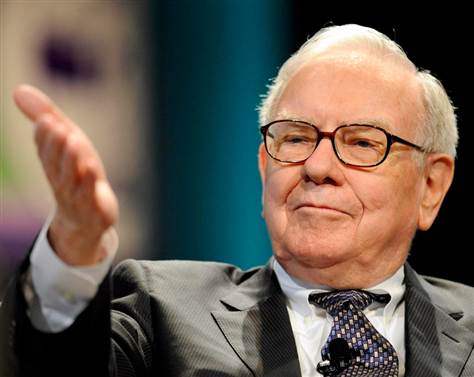
Warren Buffett
Emails have been circulating about a proposed Amendment to the Constitution that originated mostly from a comment by Warren Buffett, in an interview with CNBC:
I could end the deficit in five minutes. You just pass a law that says that anytime there is a deficit of more than 3% of GDP, all sitting members of Congress are ineligible for re-election.
The other Buffett-originated rule is that there should be a minimum tax rate of 30 percent for people who earn more than $1 million. 

This proposal was put forward by Obama in 2011 and 2016, with a graduated phase-in up to $2 million (it would affect an estimate one-third of the top 1 percent of U.S. earners). In her campaign for the presidency, Hillary Clinton supported this idea  (http://www.snopes.com/politics/quotes/buffett.asp).

Here are the first five points of the proposal that is circulating. It expands on the quotes from Buffett.

Congressional Reform Act of 2017
1. No Tenure / No Pension. A Congressman/woman collects a salary while in office and receives no pay when they're out of office. 
2. Congress ( past, present, & future ) participates in Social Security. All funds in the Congressional retirement fund move to the Social Security system immediately. All future funds flow into the Social Security system, and Congress participates with the American people. It may not be used for any other purpose. 
3. Congress can purchase their own retirement plan, just as all Americans do. 
4. Congress will no longer vote themselves a pay raise. Congressional pay will rise by the lower of CPI or 3 percent.
5. Congress loses their current health care system and participates in the same health care system as the American people.

Thursday, October 13, 2016

CAMPAIGN$ | Dem Home Stretch for Senate–Heidi's List (Updated Oct. 25, 2016)

Joe Biden warns: The White House is
 not enough.
“If we win the White House and fail to take the Senate, it’s a Pyrrhic victory”–VP Joe Biden, New York City, June 2016

How to Help Democrats 
Win the Senate
 (Updated Oct 20, 2016)

Home-Stretch Tips from 
Guest-Blogger Heidi Fiske 

In the next few years, four Supreme Court justices are likely to retire. As Mitch McConnell has shown us, the Senate can drag its feet indefinitely on confirming a new justice. 

It is essential that Democrats regain control of the Senate. Supporting these candidates, therefore, is more important than almost any race specific to your district.

This year 2016 is an especially good one to try. Democrats will need to gain just 4-5 new seats, while holding the ones they have, to take control, because many more Republicans than Democrats are up for re-election. 

Despite this potential advantage, key races are very very close. On October 11, the NY Times “Upshot” called control of the Senate a 50-50 proposition.  

Each side is fighting hard. Republicans  -- shying away from Trump -- are pouring money and, increasingly, people on the ground into these races. In Missouri, for instance, Democratic candidate Jason Kander announced October 11 that a Republican SuperPac has purportedly already talked to one million Missouri voters in person or on the phone.  


But exhilaratingly, on October 18, the Clinton campaign began transferring $6 million to state parties in seven purple states to help Get Out The Vote for down ballot candidates,  and began putting new resources into red states like Arizona, Missouri and Indiana in an effort to win a landslide. And, according to Politico, Democrats will badly outspend Republicans on TV ads in the eight most competitive Senate races: $81 million versus just $65 million for the GOP.


Democrats need to fight the new GOP push with money and on-the-ground volunteers. 
This memo is written to help you figure out how to do that. It was written by Heidi Fiske 
for posting here. Please send comments and updates to her at heidifi33 [at] aol [dot] com.

What Not to Do
  1. Don’t waste your $ and time on California, Illinois, or Wisconsin, because the Democratic challengers are virtually certain to win in these states.
  2. And don’t waste resources on Arkansas, Iowa, Kentucky and Ohio, because the Democratic challengers are almost certain to lose.
  3. Keep an eye on Indiana. It is likely that Democrat Evan Bayh will win, though he seems to be chewing through his earlier significant lead. The state has gotten redder since he left the Senate in 2011 with a serious war chest, which he is deploying here.
Heidi's Top 7 Senate Candidates
Where to Concentrate Your $ and Time


My Top 7 candidates are listed in rank order based on how likely the candidate is to win, as of October 13, 2016. (A more complete challenger list in 15 states follows.)

1. NH Maggie Hassan
Governor of New Hampshire
Special note:  Both parties have poured so much money into this small state that donations may not be half as useful here as volunteering. Race: Some polls put Hassan ahead; others the incumbent Ayotte.  Popular governor vs. popular senator.  Ayotte has recently withdrawn support for Trump; will write in Pence. Key positions: Hassan lists just about everything on her site. The first four are combating opioid crisis; national security; economy, jobs and innovation; education and workforce development.   HF note: Have heard her speak three times; she is likeable and an accomplished governor.  Website: maggiehassan.com To volunteer: http://act.maggiehassan.com/page/s/web_form_volunteer?&source=web_form_volunteer

2. PA Katie McGinty
Former chief of staff to PA governor
Race: McGinty has been slightly behind but is climbing.  Key positions:  protecting environment (worked for both President Clinton and PA governor in key environmental roles); jobs and economy; education; affordable health care; women’s and LGBT rights, protecting SS and Medicare.  HF note:  Have heard twice, once at an event where she was backed by VP Biden. Attractive and vigorous.  Website: katiemcginty.comMake check to:  Katie McGinty for US Senate and mail to Katie McGinty for US Senate, PO Box 22447, Philadelphia, PA 19110 To volunteer:  katiemcginty.com/volunteer/.

3. NV Catherine Cortez Masto
Former Nevada Attorney General
Race: running to replace Harry Reid, and has his machine behind her, but is about tied with opponent Congressman and Brigadier General Joe Heck, though she is rising.  Key positions: overturning Citizens United; raising minimum wage; protecting Medicare and Social Security; comprehensive immigration reform. As AG she fought meth labs, sex and human trafficking, predatory lending and aggressive foreclosures, scams against seniors. HF note: Have heard her once; impressive. Website: catherinecortezmasto.com. Mail check to: Catherine Cortez Masto for Senate, 8020 South Rainbow Blvd., Las Vegas, Nevada, 89139. To volunteer:  http://catherinecortezmasto.com/contact. Large Filipino population, so tagalog as well as Spanish is useful here. 

4. NC Deborah Ross
Former State Congresswoman
Race: Incumbent opponent ahead but unpopular; Ross not well known, hence volunteering is very important, and her head of volunteers, Sandra Johnson, is superb.  Key positions: for building infrastructure; women’s economic issues (e.g. minimum wage, equal pay and Social Security); solving student loan crisis; gun background checks; LGBTQ rights.  Also for protecting seniors and veterans and overturning Citizens United.  HF note:  have hosted a fundraiser and heard her speak elsewhere and met with her at length as well. Extremely impressive, poised, thoughtful. Website: deborahross.com  Make check to: Deborah Ross for Senate and mail to P O Box 28258, Raleigh, NC 27611. Contribute on-line to https://secure.actblue.com/contribute/page/drev160919

5. MO Jason Kander
Missouri Secretary of State
Race: slightly behind incumbent Roy Blunt Key positions:  Advocating for women and African Americans; government accountability; environmental protection; support for small businesses; early childhood education. Wants constitutional amendment requiring a balanced budget (!), which strikes me as a far-right, ill-advised fantasy. However as it will never pass, his other qualities make him a standout.    HF note: have heard once. Impressive, young candidate. Website: jasonkander.com Make check to:  Missourians for Kander and mail to Missourians for Kander, PO Box 548, Columbia, MO 65205. To volunteer: http://go.jasonkander.com/page/s/join-jason.

6. FL Congressman Patrick Murphy
Race:  This is such an important state that effort and money are worth it, even though Murphy is consistently seen as behind Marco Rubio, and this is the one close Senate race in which the Republicans have a bigger tv-ad war chest than the Democrats: $9.6 v. $4.2 million. However, Rubio has only 44%, not 50%; Clinton has a slight edge in the state; and Obama has done tv ads for both Hillary and Murphy, including in Spanish. Key positions:  growing the middle class; immigration reform; protecting voting rights; strengthening Social Security and Medicare. HF note:  no personal contact.  [JTM note: Alice and I have attended at least one fundraiser for him and found him to be fiscally knowledgable and alert, and socially liberal; he was the youngest person in the Congress when he was first elected; he has been elected twice with 60% of the vote in a GOP-leaning district.] Website:  www.murphyforflorida.com.  Make check to: Murphy for Florida. Mail to: Murphy for Florida, 4521 PGA Blvd #412,  Palm Beach Gardens, FL 33418

7. AZ Ann Kirkpatrick, Arizona Congresswoman 
Special note: Ann Kirkpatrick seriously lags John McCain in most polls. Also, not only does he have universal name recognition, but, because of his Senate seniority, through his committee assignments he controls a lot of benefits for Arizona. 

However, I am such a fan of Ann Kirkpatrick herself, her broad and well-organized campaign on the ground, and her money-raising team that her race is listed here as one to support. 

And she has some new advantages. McCain has said he will veto any Hillary Supreme Court nominee, which is bound to hurt him. Hillary is making a major push to take this Red State, with Michelle Obama campaigning for her there. Ann raised $3 million in the 3rd quarter. At the very least, help to her now can tee up another run in 2018, when Jeff Flake’s seat will be up.

Key positions: pro choice, pro LGBTQ rights, fighter for veterans, paid maternity leave, immigration reform, Affordable Care Act. HF note:  We have met twice at length, plus I gave a fundraiser for her, and was on the host committee for a second, so I have a good feel for her. Sweet, shrewd, down-to-earth, honest, compassionate. The word people at both fundraisers used most often to characterize her was “impressive.” Website: kirkpatrickforsenate.com  Donate online at https://secure.actblue.com/contribute/page/akesplash?recurring=true&refcode=website
Make check to: Kirkpatrick for Senate and mail to Kirkpatrick for Senate, PO Box 34421, Phoenix, AZ 8506 To volunteer:  http://www.kirkpatrickforsenate.com/landing/volunteer/


15 Dem Challengers
In State Alphabetic Order

Dem Challengers are seeking to fill a Republican-held or vacant seat.

Table Column Headings
  • C or O? Challenger, or Open seat? (“Open” means the incumbent is not running)
  • DSCC: Endorsed by the Democratic Senatorial Campaign Committee, which backs candidates in races they think are important, and winnable but not sure, hence where money is likely to have the most impact.
  • EMILY’s List: Endorsed by EMILY’s List
  • DFA: Endorsed by Democracy for America, whose candidates tend to be very progressive. (DFA backed Bernie for President.)

How to Donate: ActBlue or Check?
If you like donating frequently with small amounts, then ActBlue and other intermediaries are useful in reducing the administrative burden for campaigns of taking credit card charges and having to comply with reporting requirements for gifts. The greater frequency of small donations allows for faster feedback to candidates on how they are doing. However, donating by check keeps your email address more private and more of your money gets to the candidate without the haircuts taken by your credit card company and ActBlue.

Friday, September 9, 2016

TRUMP v. CLINTON | The Wisdom of Mark Cuban (Updated Nov. 9, 2016)

Mark Cuban offers advice to Hillary Clinton.
Someone this morning drew my attention to the comments of Mark Cuban on MSNBC’s Morning Joe.

Cuban (born July 31, 1958) is a billionaire serial entrepreneur and investor–owner of the NBA's Dallas Mavericks, Landmark Theatres, and Magnolia Pictures. He is chairman of the HDTV cable network AXS TV.

He is also a "shark" investor on the television reality series, Shark Tank. In 2011, Cuban wrote an e-book, How to Win at the Sport of Business, in which he chronicles his life experiences in business and sports. He has also written a children's book about the Mavericks.

Here is my summary of his comments this morning. He is not a Trump fan. He thinks the stock market will suffer a major crash if Trump wins the election.
The key for Hillary is getting voters to warm to her. No one’s excited about Donald. [The polls are reflecting how voters] feel about Secretary Clinton. I like the fact that now she has the press on her plane. That will allow her to drive the media topics a lot more strongly because Donald has been dominating up until now.
Trump pushes "headline porn." Donald knows that … as long as he gives you topics, things to discuss – headline porn – you don’t get to address the real issues. So we’ve got a situation where we’ve got a presidential candidate that really has “presidential Tourette’s” and I say that with all respect to this disorder, but the reality is...this uncertainty ... is crazy, but it drives the media attention.
Trump uses headline porn to appear smart. He goes nuts when someone doesn’t think he’s smart. There’s a reason why he always mentions where he went to school; there’s a reason why he needs to have his ego stroked. He doesn’t have confidence in his own intellectual ability. So when you question that—even with a smile, a little giggle, shake your head—he will go nuts.
Trump is constantly engaged in covering up his deep ignorance. If I was interviewing Trump, I would say to him: ‘You don’t understand the question, do you?’ I would just get to the heart of the matter. Then I would ask the follow-up question: ‘Do you know where Aleppo is?’ ‘Do you know what the issues are?’ ‘Do you know the history of the city and conflict?’
Hillary should show her knowledge in her reactions to Trump. I would tell [Hillary] to smirk a lot at his answers. I know they tell them not to react at all, but in Donald’s case, he’s going to notice if she’s shaking her head…. He’s like a schoolboy. And if she’s smiling at his answers, rolling her eyes (not a lot, because that would be over the top) that will get to him. If you question his intellectual ability, that drives him nuts.
Postscript After the Election (Nov. 9, 2016):

The problem with Hillary's advertising is that she used it to attack Trump (e.g., the two kids watching TV and hearing what we have all heard) instead of defining herself. Without an alternative picture of her, Trump's heavily (and effectively) promoted version of her linked to the emails (e.g., her in sunglasses with Anthony Weiner in the foreground) filled the vacuum.

Thursday, January 21, 2016

FIX THE MIX | Missing Glass-Steagall!

Sen. Carter Glass (D-Va.) (L) and Rep.
Henry Steagall (D-Ala.).
The Democratic candidates in the last debate seemed to agree that the American banking system needs fixing.
  • Sen. Bernie Sanders argued that the erosion of the Glass-Steagall wall between commercial banks and financial speculators was the setting for the 2008 financial meltdown. I think he is right on the mark, although NPR Fact Check (Jim Zarroli) questioned Sanders and Washington Post Fact Checker Glenn Kessler gave Sanders three pinocchios for saying on January 5 that "Glass-Steagall banned commercial banks from making loans to investment banking firms to facilitate their trading in the shadow-banking arena." This suggests that we need to get more of a consensus on what Glass-Steagall actually did.
  • Former Secretary of State Hillary Clinton has presented a series of proposals to fix Wall Street, although she got two pinocchios for saying "[E]verybody who’s looked at my proposals says my proposals are tougher, more effective, more comprehensive" than Democratic presidential candidate Sen. Bernie Sanders’s. Fact Checker Michelle Ye Hee Lee says: "[T]he Sanders campaign has now compiled a list of 60 experts and counting, backing his plan over Clinton’s.” 
As voters, we need to understand what the argument is about. The stock market's collapse since the beginning of 2016 may be in part a sign that the slow implementation of Dodd-Frank reforms is opening up re-emergence of fear about our financial system.

We have not done since 2008 the thorough-going financial market fixup that FDR and his GOP Treasury Secretary William H. Woodin and the Chairman of the Senate Appropriations Committee, Senator Carter Glass (D-Va.) undertook in 1933.

Glass-Steagall's Goal: Fix the Mix!

An easy way to remember what Glass-Steagall did is that it was designed to Fix the Mix, i.e., to end the mixing of speculative and deposit-taking activities.

One place to begin is to remember what FDR and Secretary Woodin faced when they opened for business in Washington on Saturday, March 4, 1933.

Most banks had been closed the day before, by order of state governments. Some were bankrupt. The public was panicked about the financial markets. They were afraid that they would never see their bank deposits again. Some of them unfortunately turned out to be right about that.

Then FDR declared a "bank holiday". He closed all the banks for the coming week, and then later extended the holiday for some of the banks. Treasury Secretary Woodin personally supervised round-the-clock printing of greenbacks, complete with cinematic coverage, while teams of his Treasury bank examiners looked at every bank and decided which ones would be pronounced solvent and opened up and which ones would be closed and liquidated, with depositors forever losing full access to their funds.

Meanwhile, House Banking Chairman Rep. Henry Steagall, Democrat of Alabama, carried water for the banks. The banks desperately wanted deposit insurance to prevent future panics and reassure the public and allow the banks to get back to the business of making money. Steagall proposed deposit insurance, and eventually the law created the FDIC and got insurance, initially only up to $2,500 per depositor.

Roosevelt and his Treasury Secretary were at first totally opposed to this deposit insurance. They wanted regulation of the kind that Sen. Glass proposed, a strict prohibition against banks putting at the disposal of investment banks any of their depositors'  funds. Sen. Glass correctly worried that deposit insurance might open up complacency about how banks were investing their money. They all understood that government-enabled insurance of bank deposits would leave the banks free to speculate with depositors' funds because depositors would no longer be afraid of their bank going broke.

Roosevelt, Woodin and Glass were induced to support limited Federal assumption of banking risks in return for Steagall's agreeing to support legislation that Sen. Glass had introduced, creating a wall between banks and speculative financial institutions. Sen. Glass was seeking to protect the Federal Reserve System he had helped create in 1913, when he had Steagall's job. They were all interested in restoring faith in financial markets. At this time, Adolf Hitler was gaining ground in Germany because of the crash of 1929 and the inability of the financial markets to get back on their feet.

The Glass-Steagall Act (the Banking Act) of 1933 had two main parts. One was deposit insurance. This was gradually extended from $2,500 per depositor to $250,000 per account. The other half of the Glass-Steagall bill was regulation of securities firms and separation of investment banks from commercial banks. This that was gutted between 1950 and 2002, especially in 1999. 

Glass-Steagall was about protecting the henhouse assets of FDIC-insured banks from foxes selling speculative securities and generally engaging in risky forward transactions (futures and options). Glass-Steagall was about putting a wall between the humdrum business of taking deposits from consumers and making secured loans back to them, and the risky business of speculating in business equity and debt.

Glass-Steagall split apart two groups of financial institutions–commercial banks and investment banks. Investment banks underwrite and place securities (debt and equity) and they engage in transactions of two kinds:
  • A passive role, helping someone that wants to reduce their risk. 
  • An active role, entering the market with the intent of gambling. In this role, they are creating risks, and the more they disguise a deal to minimize the significance of risks in a transaction, the more dangerous their activity to systemic stability.
Glass-Steagall was designed to reduce market risks in two ways.
  • It provided federal deposit insurance, which reduced the risks for both the banks and their depositors. The banks really wanted this, because when FDR took office the entire banking system was shut down by risks that went sour.
  • It provided for bank regulation to limit the risk to the Federal Government.
The law was strict. No existing mixing of investment banking and deposit-taking banks was permitted by Glass-Steagall. There was no "grandfathering".

Bank Lobbyists' Goal: Add to the FDIC and Mix the Fix!

What has happened since Glass-Steagall?

For the first 50 years, the banks have sought to beef up the Steagall side, to greatly expand Federal deposit insurance. The deposit insurance half of Glass-Steagall has not been eroded; on the contrary:
  • Federal Deposit Insurance Corporation (FDIC) coverage has been beefed up more than 100-fold. The limit has steadily increased from the original $2,500 per depositor to $250,000 per deposit account.
  • Depositors are now allowed to have more than one covered account (sole, joint, custodian etc.), multiplying the coverage further. 
  • Beyond that, the FDIC for efficiency reasons in practice avoids the costly litigation involved in liquidating a bank and instead tries to negotiate takeover over its assets and liabilities by a solvent bank, which in effect means 100 percent coverage of deposits.
Starting under President Reagan, Congress has been mixing the fix, dismantling protections put in place by FDR, Woodin and Glass in 1933, in the name of "modernization". These moves, culminating in the 1999 Gramm-Leach-Bliley Act, lowered the walls between the banks and non-bank institutions, without a corresponding increase in regulation of non-bank financial institutions. When Gramm-Leach-Bliley was passed, the Economist magazine in 1999 expressed concern that deregulating the banks without a broadening of oversight of non-bank institutions of the kind that Britain had undertaken in 1997 was inviting trouble. The Economist was right.

Requiems for Glass-Steagall

1. Warren Gunnels, Sanders’s chief policy aide, is quoted by Glenn Kessler of the Washington Post:  "[C]ommercial banks played a crucial role as buyers and sellers of ... credit-default swaps, and other derivatives. This would not have happened without the watering down of Glass-Steagall in the 1980s and the eventual repeal of Glass-Steagall in 1999."

2. Brookings Fellow Phillip Wallach  agrees that Citicorp could never have become such a megabank without Gramm-Leach-Bliley: "That is the best arrow in the Glass-Steagall revivalists’ quiver. Citibank deposits were attached to Citibank bad investments, and Citi was the Too-Big-To-Fail-iest of them all."

3.  James G. Rickards, former general counsel of the Long-Term Capital Management hedge fund which was brought down by a "black swan," agrees with Sanders that the 1999 law was a bad one and that there was an important cultural shift after Glass-Steagall was repealed. Previously, he said, such shadow-bank loans required permission from the Federal Reserve under rule 4(c)(8). "The presumption was it was illegal unless the Fed said you can do it. After Glass-Steagall, we didn’t have to ask permission, and it enabled the banks to do what they wanted."

4. Camden R. Fine, chief executive of the Independent Community Bankers of America, favors a restoration of Glass-Steagall. He notes that Lehman owned a federally insured industrial loan company (ILC) that held insured deposits: "[T]he repeal of Glass-Steagall gave both commercial banks and investment banks who owned ILCs much greater flexibility to deploy their capital and their deposit funds to whatever purposes they wished, and those firms leveraged themselves many, many multiples of times more than they would have been allowed before."

5. Former Federal Reserve chairman Paul Volcker supports the idea that eliminating the Glass-Steagall separation of commercial and investment banking allowed for a trading mentality to take hold at some banks.

6. Harvard B School Prof. David A. Moss in 2009: "[T]he success of New Deal financial regulation [may have] contributed to its own undoing. After nearly 50 years of relative financial calm, academics and policymakers alike may have begun to take that stability for granted. Given this mindset, financial regulation looked like an unnecessary burden."

7. Former Federal Reserve Chairman Alan Greenspan said in October 2008: "Those of us who have looked to the self-interest of lending institutions to protect shareholders’ equity, myself included, are in a state of shocked disbelief."

8. John Reed, former Chairman of Citigroup, wrote recently in The Financial Times that the Glass-Steagall wall between banks and investment banks was needed: "As is now clear, traditional banking attracts one kind of talent, […] in many important respects, risk averse. Investment bankers and their traders are […] comfortable with, and many even seek out, risk and are more focused on immediate reward. In addition, investment banking organizations tend to organize and focus on products rather than customers. This creates fundamental differences in values."

Wednesday, October 14, 2015

BUBBLES | Which Candidate Best Understands Them?

Bernie Sanders wants to bring back Glass-Steagall; Hillary Clinton does not.
Pam and Russ Martens argue that Sen. Bernie Sanders showed in the debate on Tuesday the best appreciation of the causes of the 2008 financial meltdown, the risks remaining today. and what to do to regulate the financial markets.

The Martenses say that Hillary Clinton does not understand that Dodd-Frank gives power to the regulatory agencies to break up large banks.

They are impressed that Sanders opposed the 1999 teardown of the Glass portion of the 1933 Glass-Steagall Act, back when it happened. (The wall between commercial and investment banks was torn down, but the insurance of commercial-bank deposits proposed by Rep. Henry Steagall is still in place.)

Sanders wants to bring back the wall created by Senator Carter Glass (D-Va.). Hillary Clinton does not.

Although Sanders calls himself a Democratic Socialist and calls for revolution, what he is saying fits what the London Economist Magazine said in 1999. I pointed out the Economist position in Huffington Post in 2008.

Tuesday, December 23, 2014

IRISH BONDS | Look Smashing (Updated)

Taoiseach Enda Kenny (L) and British Prime
Minister David Cameron after deadlock.
Irish bonds were issued in the United States by Éire's president in 1919-1920.

Given British Prime Minister David Cameron's hard line on the level of continued aid to Northern Ireland, this idea was recently resurrected.

Cameron is seeking to pressure the Northern Irish Government to make cuts in welfare programs. Taoiseach Enda Kenny and Cameron met to try to resolve their differences and failed to come to an agreement.

Northern Ireland First Minister Peter Robinson and Deputy First Minister Martin McGuinness have criticized the disappointing level of proposed aid from  Britain.

In this environment, one question is: "Are there, realistically, alternative or supplemental sources of funding? What are they?" One idea that worked at the dawn of Éire in 1919-20 is Irish bonds.

1920: Irish Bonds Sold in USA

Éamon de Valera was born October 14, 1882 in New York City and was elected president of the first Dáil from June 1918. He left Ireland from June 1919 to December 1920, leaving behind the leadership of the Irish Republic to Michael Collins. His mission was to sell to Irish-Americans bond certificates in denominations of $10 (nearly $120 in today's dollars) and $25 (nearly $300 in today's dollars).

He was successful, raising $5.5 million ($65 million in 2014 dollars) from American supporters, far more than the Dáil expected.  Of this, $500,000 was reportedly invested in supporting the election of Warren Harding, the winning (Republican) presidential candidate in 1920. Irish Catholics in the United States were still outraged at Democrat Woodrow Wilson's having brought the United States into the Great War on the side of Britain. 

1995: New York City Comptroller Proposes Ireland Peace Bond

Seeking a way to use U.S. economic incentives to bring together Northern Ireland and Éire in peaceful cooperation, Comptroller Hevesi of New York City proposed an Ireland Peace Bond that would gather financing from several governments (U.S., Irish Republic, Northern Ireland and others).

The Peace Bond proposal was put together by a team in the Comptroller's Office. The models for this were both de Valera's 1920 Irish bonds and the successful sale of Israel Bonds to Americans since World War II. The idea behind the Comptroller's Ireland Peace Bond was that it would support an Irish Development Bank to make loans to businesses in Northern Ireland and the border counties in  Ã‰ire.

For pension funds to invest in them they would require a U.S. Government guarantee of principal.  The proposal was endorsed by President Bill Clinton but when hostilities resumed in Northern Ireland the idea was scrapped. When hostilities were again ended, the idea for an Ireland Peace Bond was revived by then-Senator Hillary Clinton.

December 2014: The Search for Funding for the Northern Ireland Budget

As mentioned, British Prime Minister Cameron and Taoiseach Kenny left Belfast earlier this month having failed to agree on contentious issues, especially the need for more British support for the Six Counties in the north. Sinn Féin's president Gerry Adams criticized Cameron's financial package, which proposed to replace aid with £1 billion over 5-6 years in the form of 25-year loans with interest, as did SDLP leader Alasdair McDonnell. Northern Ireland's First Minister Robinson and his Deputy McGuinness, speaking at Stormont, were also critical of Cameron's offer.

Irish officials have been looking at options, with their eyes on the success of the Scottish independence movement in promoting devolution. One idea is to imitate de Valera's success a century ago and appeal for funds to Irish Americans.

Comment

I was appointed Chief Economist at the New York City Comptroller's Office under Comptroller Liz Holtzman. When Alan Hevesi was elected I was made part of the team that went to work in 1995 on the Comptroller's plan for an Ireland Peace BondBack in 1995, the concept was for a development bank that would invest in business.

In 2014, the concept looks more like a traditional government bond for infrastructure, a "revenue bond" that would build something that would generate rent to pay off the bond. The Northern Ireland budget experts will have to see how this might help their 2015 budget over time. If the bond is not designed and invested well, it will create debt-service obligations that will be hard to keep up with.

What would the advantage of an Irish Peace Bond be over Cameron's 25-year loan proposal? It would depend on the details. The Ireland Peace bond might carry a lower interest rate if Irish Americans viewed buying the bond as an obligation of their heritage. In contemporary terms it could be thought of as crowd-funding for a peaceful and devolving Northern Ireland.

Postscript - Update

Since this was written, the outlines of a package were agreed upon. Britain offered more money, a mix of loans and cash. If the deal stays together, the sale of Irish bonds to Americans would be in addition to, not instead of, financing and aid from London.

Tuesday, October 7, 2014

OBAMA | Visit to Chelsea Area, One-Time Alinsky Battleground

The Presidential Car carrying President Obama is first in line here, with a flag flying on each side of the front hood.
All photos by John Tepper Marlin (for permission to use, email teppermarlin at aol.com).
President Obama has arrived, a few minutes late, to visit the 400 block of West 22nd Street.

I have a bird's-eye view. He is expected to be here for an hour. It's a $25,000-per-guest fundraiser.

The neighborhood is of some importance in the history of community organizing. Saul Alinsky was here to organize the neighborhood, but it did not go so well (see below).

Not a good day to be illegally parked when "No Parking
Tuesday" signs abounded.
During the past few days, there seem to have been 1,000 federal, state and local police and sanitation workers in the area, checking and cleaning and barricading.

For local residents, it has been hard to miss that a VIP is visiting:
  • Deliveries to this block were cancelled for today.
  • All the Citibikes were removed from the racks in the block (see photo). 
  • Two days ago barriers were brought in barricading the entire block and Ninth Avenue to the north and south (see photo).
  • All public trash baskets and other "street furniture" (newspaper delivery boxes) have been removed.
  • "No Parking Tuesday" signs went up over the weekend.
  • This morning the NYPD tow trucks were out to enforce the parking ban. Three of them were just now getting ready to tow cars away across the road (see photo).
  • Oct. 7 morning - Cleaning the 400 block of West 22nd St.
     Obama is hours away from visiting the white house
    the street-cleaning truck is in front of. Note Citibikes
     are removed, and the barriers extend all down the block.
  • Sanitation trucks - cleaning trucks and two big trucks full of sand to barricade the block - arrived this morning (see photo).
  • Police officers are heavily concentrated in the area, including on top of a couple of buildings (see photo).
The intrusion on the neighborhood of security measures did not go unnoticed and was slated for discussion at the next block association meeting.

So where did the President go? To 460 West 22 Street, a renovated 16-foot-wide brownstone. Neighborhood gossip is the owners spent $10 million on the renovation. But the fact is the owners themselves say it was purchased for $4 million and the renovation cost $4 million.

It is advertised by Douglas Elliman (Eklund Gomes team) for sale with a lofty asking price of $16.25 million. The publicity from the fundraiser will clearly help see the building at some price. (See end of post for more on the house.)

The Alinsky Connection

The neighborhood has a community organizing history, which Barack Obama is surely - as a former community organizer in Chicago - aware of. Obama studied at the Industrial Areas Foundation (IAF),  created by Saul Alinsky with the help of supporters like Marshall Field III, Sears heiress Adele Rosenwald Levy, Gardiner Howland Shaw (an FDR assistant secretary of state) and Eugene Meyer, an investment banker who chaired the Fed under Hoover in 1930-33.

With the help of graduates of the IAF training, Alinsky had an early success organizing the Back of the Yards area, the meat-packing district made infamous in Upton Sinclair's 1906 novel The Jungle. During the late 1930s and 1940s, Alinsky formed the Back of the Yards [Neighborhood] Council (BOYC), which brought together (1) Catholic priests looking to retain and expand their congregations with (2) organizers for the far-left Packinghouse Workers Organizing Committee, which was looking for troops to mobilize. The alliance worked well for long enough to establish Alinsky, in the words of William F. Buckley, Jr., as  "very close to being an organizational genius".

Eugene Meyer and his wife Agnes co-owned The Washington Post and in 1945 he wrote a six-part series praising Alinsky's Chicago work.  Assembled as a book called The Orderly Revolution, it put Alinsky on the map.

Awaiting the President - a view up 9th Avenue from 22nd St.
At left, London Terrace, first U.S. urban renewal project, built
in 1931. At right, Penn South, the ILGWU-sponsored co-op
 dedicated in 1962 by JFK and Eleanor Roosevelt.
Around that time, Alinsky wrote Reveille for Radicals (1946), although his Rules for Radicals (1971, the year before his death) is now better known. 

The Rules were circulating in draft in the 1960s; Alinsky said that in this book he was seeking to provide the kind of guidance to "Have-Nots" (the 99 percent) that centuries ago Niccolo Macchiavelli's The Prince provided for the "Haves" (what we call today the 1 percent).

Less known is that Alinsky was brought in to Chelsea in the late 1950s by Hudson Guild, which obtained for him a $300,000 grant to organize Chelsea. At that time, the area between 23rd Street and 28th Street that was soon to be razed to make way for ILGWU leader David Dubinsky's Penn [Station] South development was still mostly composed of aging tenements, which were largely occupied by the families of Irish Catholic longshoremen and their families.

There was much discussion of a need for urban renewal in the area, and in 1958 the ILGWU plan for developing the area was made public. Dan Carpenter heard of Alinsky's success in Chicago and thought he would be useful in mobilizing Chelsea to address its urban reutilization needs, perhaps with an alternative plan to the one that the ILGWU was working on,

Security officers on the roof opposite the house
Obama is visiting.
Dan Carpenter was originally "head worker" at Hudson Guild, the well-regarded settlement house. He was then named Executive Director. Around that time he married the daughter of the founder of Hudson Guild, John Lovejoy Elliott, who was active with the Ethical Culture Society ("deeds not creeds"). I am familiar with the Society because both of my children went to the Ethical Culture School in Manhattan.

Alinsky's first move, following his Back of the Yards playbook, was to form the Chelsea Community Council, with Hudson Guild as his main local partner. However, at its organizing meeting in 1958, this Council, according to someone who was there and told me about it, fell apart.

The entry tent to the house.
The problem seems to be that Alinsky was following the playbook he had developed in Chicago, where his success had depended on the active cooperation of several Cardinal Archbishops of Chicago - Stritch until 1958, then Meyer and Bernardin. So he recruited Father Robert Dunn of St. Columba's Church on 25th Street east of Eighth Avenue. But this greatly distressed Dan Carpenter and other members of the Liberal Party, because the Catholics in the area operated independently of, and were suspicious of, the local socialists and Communists who led some of the labor union locals.

The Catholic Church was focused on its flock - ministering to the Irish and Puerto Rican residents who constituted, by one report, two-thirds of the 60,000 area residents - and had little time or patience to work with Alinsky's other main partners. St. Columba's and the Guardian Angel Church on 10th Avenue between 21st and 22nd Street were struggling to care for their aging Irish dockworkers and families, at the same time as the influx of Puerto Rican immigrants was changing the character and needs of the congregations.

The house at 460 West 22 Street. Note
Cipriani catering truck and glass-enclosed
penthouse. 
Hudson Guild was seen as challenging Catholic doctrine when, for example, it distributed information in the neighborhood about birth control or the philosophy of the Ethical Culture Society.

So when at the organizing meeting of the Chelsea Community Council, Father Dunn arrived with a list of people he was going to appoint to get things done, the Liberal Party members were distressed. They were expecting a proper election.

Both sides were shocked at each other, and the possibility of a viable partnership among the competing groups was pretty much all over after that. Dan Carpenter - a courtly man with a gentle manner - told me before he died that he was personally glad to see Alinsky leave town.

Dan lived in the 400 block of 20th Street, opposite the Episcopal General Theological Seminary, part of the Chelsea Historic District. He told me the 400 West 22nd Street block was very important during the controversy.

The Clintons have a connection to the story - not just that they named their daughter after the neighborhood (and the song "Chelsea Morning") but also that Hillary wrote her senior thesis at Wellesley on Saul Alinsky.

Looking east from the 400 block of West 22 Street. 
She basically said, according to a report - the thesis was kept under wraps during the Clinton presidency - that Alinsky's methods were not always successful. She could have used Chelsea as a case in point. Saul Alinsky reportedly was impressed enough with her thesis to offer Hillary Clinton a job when she graduated from Wellesley. Instead, she went on to law school; but she kept in touch with Alinsky by mail during the next few years.

The House That Obama Visited
Clever For Sale signs at 412 W 22 St.

The house at 460 West 22 Street is approximately 5,000 sf, which would put the asking price at $3,250 per sf. The listing says it has a garden in back. It is featured on the "Driven by Design" tour of Architectural Digest. The listing goes on:
Not so effective a sign.
Originally constructed in 1840, this landmarked, Italianate single-family townhouse just underwent a multi-million dollar complete artisanal-renovation and full restoration by Fanuka, Inc. (of Million Dollar Contractor) and Suk Design. Located on Chelsea's most refined block, this house is directly adjacent to picturesque Clement Moore Park, and is within short distance to the High Line, the Hudson River, Avenues World School, and the Dia Museum / Chelsea Art District. At 64' deep, this home features triple exposures and over 6000 sf of indoor living & outdoor entertaining space, which has been pristinely cultivated into a 6-floor [including basement], 4 bedroom / 4 bathroom + 1 powder-room mansion with 4 gas fireplaces and elevator.
According to the New York Times and HuffPost (Blake Fleetwood), the fundraiser is at a building with landmark status and is owned by Bryan Eure and his husband Bill White, the former president of Intrepid Sea, Air and Space Museum and the chairman of business development firm Constellation Group.

Huge pumpkin outside 460
W 22 St. - trick or treaters,
here is the stop to make!
I fear this post might be viewed as "native advertising" - i.e., advertising that serves the purposes of Douglas Elliman while ostensibly just telling a story.

May I therefore draw your attention to two other houses on the same side of the street in the same block, also for sale, one with three For Sale signs and one with a hand-made sign that notes how much space you would get with this house.

Meanwhile, I recommend that trick-or-treaters stop by 460 West 22 Street at the end of October. Brownstoners on the block take Halloween seriously. They are also pretty organized and I wouldn't be surprised if some lawyers connected with or hired by property-owners in the neighborhood are right now looking for ways to limit the number of events that residents are allowed to have that shut down the block for a week at a time. New York City has a process for approving parades and street fairs, and some of these fairs are less disruptive than this fundraiser was. Stay tuned.

Sources include interviews with local residents and: John T.  McGreevy, Parish Borders: The Catholic Encounter with Race in the Twentieth Century Urban North, Historical Studies of Urban America, University of Chicago, 1996.

Wednesday, November 5, 2008

AdAge: Obama Makes Marketing History

On October 6, I posted on Huffington Post an analysis from my friend Patt Cottingham that impressed me. She limned seven cogent reasons why the Obama brand was better than McCain's. See Brand Expert Scores Obama v. McCain 7 Ways.

Now Obama has been elected President and AdAge announces today that November 4, 2008 is the biggest day for marketing in universal history. President-Elect Obama's "Change" theme gets this all-time cosmic award. Here's the picture (as if you need to see another) and what AdAge had to say about it.

Take a relatively unknown man. Younger than all of his opponents. Black. With a bad-sounding name. Consider his first opponent: the best-known woman in America, connected to one of the most successful politicians in history. Then consider his second opponent: a well-known war hero with a long, distinguished record as a U.S. senator. Obama owns the 'change' idea in voters' minds. It didn't matter. Barack Obama had a better marketing strategy than either of them.
Barack Obama used "Change" as the "big truth."
If you tell the truth often enough and keep repeating it, the truth gets bigger and bigger, creating an aura of legitimacy and authenticity. Hillary Clinton first tried "experience." When she saw the progress Mr. Obama was making, she shifted to "Countdown to change." Then when the critics pointed out her me-too approach, she shifted to "Solutions for America." What word is associated with Ms. Clinton today? I don't know, do you?
AdAge gives three marketing reasons for the triumph of Obama's campaign:
1. Simplicity. About 70 percent of the population thinks the country is going in the wrong direction. Hence a smart focus on "change."
2. Consistency. Most advertisers try to "communicate". They should be trying to "position" consistently.
3. Relevance. "If you're losing the battle, shift the battlefield." Obama forced his opponents to devote much of their campaign time discussing changes they proposed for the country and showing why they were different from Obama's.