Showing posts with label Donald Trump. Show all posts

Thursday, November 12, 2020

BIDEN TRANSITION | Lessons from FDR (updated December 2, 2020)

                                           (Library of Congress)
Hoover traveling with FDR in silence to FDR'
inauguration, Saturday, March 4, 1933.  

November 12, 2020—The East Hampton Star just published my political-history notes on lessons from FDR's first transition.

—The article is updated with information on most-talked-about appointments here. Biden transition teams list is here.

—Some jobs are not coming back even when Covid-19 is over.

The photo of FDR and Hoover above, on their way to FDR's inauguration, is poignant. On the way, they didn't talk much. Hoover asked a favor of FDR for someone he appointed and would be left behind. FDR promised nothing.

Although FDR served as President for more than twelve years, until his death in 1945, the President and ex-President never met again. Transitions can be brutal in both directions. 

FDR faced a mountain of challenges that Hoover had never addressed. Hoover went from being the most powerful person in a devastated world into a total eclipse by someone who knew better than Hoover what to do with the job and power that Hoover left behind.

Wednesday, September 9, 2020

TRUMP | "Fitness" for the Presidency

Former Defense Secretary
James Mattis.
September 9, 2020—Today we learned that Donald Trump was described as totally “unfit” to serve as President by Former Defense Secretary James Mattis. 

This label appears in Bob Woodward’s soon-to-be-released book, Rage. Mattis was talking with then-Director of National Intelligence Dan Coats, says  Woodward (https://bit.ly/32f6XVd). 

Mattis resigned his position in late 2018 because of disagreements with the president on defense policies. He told Coats that the President was “dangerous” and “there may come a time when we have to take collective action” against Trump, according to excerpts from the Woodward book reported on by The Washington Post this morning (https://bit.ly/35qM8rV). 


The “collective action” Mattis is referring to is presumably Article 25 of (25th Amendment to) the Constitution, which provides for either (1) a President declaring himself/herself incapable of carrying out his/her duties or (2) those around the President, i.e., the Cabinet, so declaring (https://www.law.cornell.edu/constitution/amendmentxxv).


However, Article 25 was designed for addressing a disability rather than a mental or temperamental disorder. 


What Makes a President Fit or Unfit?


Two key factors make someone fit to be President, apart from general sanity. They are experience (including education) and temperament. 


Going back to the ten presidents before Trump, all had either legislative (four as Senators— Barack Obama, Gerald Ford, Lyndon Johnson, Jack Kennedy—and one as a Representative, George H. W. Bush) or government executive (five Governors: George W. Bush, Bill Clinton, Ronald Reagan, Jimmy Carter, Richard Nixon). 


Trump had neither legislative nor government executive experience. He had some business experience, but one that viewed government as the enemy, an environment with little connection to the constraints of government administration and leadership.


Historically—The Best Presidents


C-Span has an interesting list of qualifications that make for the best presidents. It has an ongoing tabulation of the best ones ever, updated to 2017. In first place, consistently since 2000, is Abraham Lincoln. (If George Washington's presidencies created the nation, Lincoln's preserved it.) 


George Washington and Franklin Delano Roosevelt take the next two spots (they traded places between 2000 and 2009). Theodore Roosevelt comes in fourth. See https://www.c-span.org/presidentsurvey2017/.


George Washington and Lincoln get respect for creating and preserving the United States. But the two Roosevelts had challenges more like the ones we have today. They needed a lead a team to address problems that the private marketplace was facing to address.


Franklin Delano Roosevelt


FDR in particular inherited a country that was in a deep Depression, with bank failures panicking depositors and unemployment at 25 percent. It required political savvy and administrative skill to steer the country through that era and then through a World War.


FDR was well prepared to take on these challenges because he had both the experience and the temperament to do so. He had two terms as Governor of New York State, during which time he led the country in innovative responses to the Depression.


He gained important experience operating in Washington from his eight years as Assistant Secretary of the Navy under President Wilson. He was appointed by the Secretary of the Navy, Josephus Daniels, who had been editor of the Raleigh News & Observer. He learned to work with members of Congress. He helped reorganize the Navy Department. He mastered the facts of the Navy Department and stuck to them at Congressional hearings. He learned to work with his party in Washington and in New York.


When the United States went to war with Germany on April 6, 1917, FDR got a taste of wartime decision-making. He presided over a four-fold increase in the Navy's strength in six months, involving the building of new ships and stockpiling of supplies.


Donald Trump did not have anything like this kind of preparation for his presidency.

Wednesday, November 7, 2018

TRUMP | Has Crossed the Line

PROTESTS CALLED FOR THURSDAY, NOVEMBER 8, 5 PM LOCAL TIME
Donald Trump has installed a crony to oversee the special counsel's Trump-Russia investigation, crossing a red line set to protect the investigation. By replacing Rod Rosenstein with just-named Acting Attorney General Matt Whitaker as special counsel Robert Mueller's boss on the investigation, Trump has undercut the independence of the investigation. Whitaker has publicly outlined strategies to stifle the investigation and cannot be allowed to remain in charge of it. The Nobody Is Above the Law network demands that Whitaker immediately commit not to assume supervision of the investigation. Our hundreds of response events are being launched to demonstrate the public demand for action to correct this injustice. We will update this page as the situation develops.
Enter your ZIP code here and find the closest rally to protest: Nobody Is Above the Law
Once you sign up, make sure to invite friends to join you at the event!

Monday, July 2, 2018

HEIDI FISKE | Mexico Ready to Embrace China?

Lopéz Obrador, Mexico's Newly 
Elected President
The following story originated from our Mexico tracker, Heidi Fiske:

Trump's plan to alienate the neighbors and friends of the United States is bearing fruit.

This blogpost, written by Heidi Fiske, expressed our alarm about the case of Mexico. Our concerns were justified. The country is reacting as one might expect, turning to other nations to seek help.

Until now, Mexican leaders have been wary of involving China in their country’s affairs for fear of angering the United States. 

Not any more. Its just-elected socialist president Andrés Manuel López Obrador plans a range of infrastructure projects in the poverty-stricken south of Mexico in which he grew up.

Many of these projects are expected to be financed with Chinese loans. We are watching this evolving story.

Thursday, April 5, 2018

TRUMP | Stealing America Blind


April 5, 2018 – If you are not in New York City, you may be missing seeing an empiggened Trump looking up at us from every newsstand.

The cover of the new (April 2-15, 2018) New York Magazine has a way of commanding our attention.

The stories inside do not disappoint.
1. Corruption Is Trump's Greatest Political Liability nymag.com/daily/intelligencer/.../corruption
is-trumps-greatest-political-liability.html


“My whole life I've been greedy, greedy, greedy,” 
declared Donald duringthe 2016 campaign.


2. Trump & Co. Are Stealing America Blind: A Timeline
nymag.com/daily/.../2018/04/trump-and-co-are-stealing-america-blind-timeline.html

Donald Trump's love of money has no limits; his greediness rules all. Here's a timeline of 501 days of corruption within the Trump administration and the Trump Organization.

Video for New York Magazine Trump Corruption
https://www.msnbc.com/.../is-trump-s-corruption-the-key-to-stopping...
New York Magazine's Jonathan Chait argues that it's not Russia or Stormy Daniels that can stop Trump.


New York magazine is taking a harsh swipe at President Trump with its new cover depicting the president as a pig.

5. New York Mag empiggens Trump | Media ...

adage.com/article/media/corruption-stupid-york-mag-empiggens-trump/312952/

The April 2, 2018 issue ofNew York Magazine depicts President Trump as a pig to illustrate a Jonathan Chait story about Trump Administration corruption.
And see also:

Corruption | The New Yorker

https://www.newyorker.com/tag/corruption

Read more about corruption from The New Yorker. ... “Mark Felt,” the Movie, and Donald Trump, the President. The deal in Georgia raises some of the same questions as many other deals the Trump Organization has done around the world. By Adam Davidson.

Monday, March 26, 2018

HEIDI FISKE | Is Trump Seeking War?

John R. Bolton, President Trump's
National Security Advisor-Designate
(The following Guest Post was written by Heidi Fiske:)

Pundits right and left fear that John Bolton as National Security Advisor could cause us to stumble into war.

But what if it isn’t stumbling? What if Trump is actively seeking to take us into war?

There are three reasons why this is possible, if not likely. I number them below.

But let’s begin with the background. Before the Bolton appointment, Trump had been priming the war pump in several ways.

First, 60 percent of the top diplomats in the State Department left under Secretary Rex Tillerson, reducing our ability to negotiate, or gain support from allies. To this day there is no ambassador to South Korea. The top U.S. official there, since January 2017, is chargé d’affaires Mark Knapper.

Next, Trump fired Tillerson, who urged keeping the Iran nuclear deal in place and who advocated talking with North Korea, to be replaced by Mike Pompeo. As head of the CIA, Pompeo was the only Trump cabinet member to argue for decertifying the Iran nuclear deal. Not only could that in itself lead to war, but it should make North Korea discount any promise Trump might make in talks with Kim.

Finally, the cherry on the top, is Bolton. He has argued for a pre-emptive strike against North Korea (“The legal case for striking North Korea first,” The Wall Street Journal, February 28, 2018); bombing Iran (“To stop Iran’s bomb, bomb Iran,” The New York Times, March 26, 2015), and to this day he supports our having started the Iraq War, which many others regard as the greatest strategic mistake in our recent history. Bolton will start his new job just as the final jockeying about conditions for the Trump/Kim talks are being worked out – talks whose only purpose, he has said, is to prove that talks don’t work, thus clearing the way for military action. He will also start just about the same time as the Iran nuclear deal needs to be recertified on May 12.

Could his new personnel choices herald that Trump is actively seeking to go to war? Consider these three things:
  1. Trump’s tactic throughout his campaign and Presidency has been to drive unpleasant news off the front pages by creating a new ruckus. When he was taking heat over his stance on the healthcare bill and response to the hurricanes, for instance, he started the stink over football players kneeling during the national anthem. Now multiple amatory scandals, and the Mueller investigation, dominate the news. Very few things could top these in importance or reader appeal. War, however, could drive both off the front pages.
  2. Trump has good reason to think he’s Teflon. The tax legislation, tariffs, and removal of financial protections could all hurt him with his base – but they haven’t much yet. While an exhaustive January poll by Morning Consult found his approval down among all voting blocs, his support is still well over 40 percent among whites, military personnel and households, private sector workers, all Christians, southerners, retirees, those earning over $50,000, men, all adults, and well over 70 percent among Republicans as a whole, and Republican men and women separately. And his approval is still 87 percent among those who voted for him in 2016.
  3. Trump surely remembers the record of another ever-less-popular President, George W. Bush. In May 2004, during the runup to his re-election, a CBS News poll found that Bush’s negative rating was 65 percent, and that, from January 2004, “majorities of the public have consistently said the U.S. is off on the wrong track.” Yet he was re-elected: Why? Here is a stunning statistic: No wartime President has ever failed to win re-election.
So let’s suppose for a moment that Trump wants to go to war. What’s to stop him? Congress, you might think. Not so fast: The 1973 War Powers Resolution gives the President 60 days to deploy troops before war must be declared by Congress. And obviously after those 60 days we could be in such a morass that there would be no turning back.

Anything else? Two other possible events might dial back the White House Bellicosity Meter:
Bolton doesn't need Senate approval, but he might not get a security clearance before he is scheduled to start work in April.

Pompeo might not be confirmed by the Senate – highly unlikely, while the President retains high ratings with his base. And who knows whom Trump would nominate next?

Thus this observer concludes that there is at least a 50-50 chance that we are on our way to a new war, or wars. The President’s personnel choices are not the cause. They are more likely the result of his desire for war.

Tuesday, March 13, 2018

TRUMP | Changes His Mind about Gun Safety

Today we learn the president has met with the NRA and has changed his mind about plans to make schools safe from guns. http://nyti.ms/2HriweM

Our president is behaving like the monarch in The Little Prince. 

He orders people to do something. Then, if there is any problem from His Base, he changes his mind and orders people to do the opposite.
"It is contrary to etiquette to yawn in the presence of a king," the monarch said to the little prince. "I forbid you to do so."
"I can't help it. I can't stop myself," replied the little prince, thoroughly embarrassed. "I have come on a long journey, and I have had no sleep . . ."
"Ah, then," the king said. "I order you to yawn.” http://bit.ly/2pbbHGV
Luckily, this is not a monarchy. 

Wednesday, March 7, 2018

NAZIS ELECTED | Germany Votes in Führer, 85 Years Ago

Elections to the Reischstag, by party, 1928-1933. In 1929 the Nazis won only 
12 seats in the Reichstag. The worldwide crash in stock market prices and
high unemployment drove seats up to 108 in 1930, 230 in 1932 and 288 in 
March 1933.  Later in 1933, all parties other than the Nazis were banned.
March 5, 2018 — This date in 1933 (a Sunday then, a Monday this year) was the day after FDR took the reins as President of the United States.

It was also, chillingly, the day German voters elected 288 Nazi Party members to the Weimar Republic's parliament, the Reischstag.

Nazi Party leader Adolf Hitler had been appointed Reich Chancellor by German President Paul von Hindenburg, the formal head of the German Government since 1925. An aristocrat (the "von" prefix signifies in Germany that someone has the title of, at least, Baron), von Hindenburg did not think much of upstart Adolf Hitler. However, he was at his wit's end dealing with Hitler's appeal to a totally demoralized German people. Hindenburg hoped to establish control over the Nazis by bringing Hitler into his tent.


Hitler swiftly trashed the tent...

He laid out his 1933 campaign early in the year, in a radio Appeal to the German People on February 1, which he reportedly wrote mostly himself:
  • He accused the Weimar coalition that ruled the country under the Social Democrats since Nov. 9, 1918, of generating 14 years of "Marxist" rule.
  • He said that unless the German People reacted against this "Bolshevism", there would be anarchy. 
  • Finally, he said that Germany's fate was in the hands of Almighty God and the German voters.
Hitler's Appeal seems contemporary in the buttons he pressed. His Appeal includes these sentiments:
    Our inheritance [from the Weimar Republic] is appalling. The task before us is the most difficult facing German statesmen in living memory. But we all have unbounded confidence, for we believe in our nation and in its eternal values. Farmers, workers, and the middle class must unite to contribute the bricks with which to build the new Reich. The National [Nazi] Government will regard as its first and supreme task to restore to the German people unity of mind and will. It will preserve and defend the foundations on which the strength of our nation rests. It will take under its firm protection Christianity as the basis of our morality, and the family as the nucleus of our nation and our state. Standing above estates and classes, it will bring back to our people the consciousness of its racial and political unity and the obligations arising therefrom. It wishes to base the education of German youth on respect for our great past and pride in our old traditions. It will therefore declare merciless war on spiritual, political and cultural nihilism. Germany must not and will not sink into Communist anarchy. [Bold face added.]
Hitler pays his (last) respects to democracy, 1933.

That 1933 election was the last that West Germans were given a choice to vote for until 1949, and it was the last free election in a united Germany until 1990.

The March 1933 election made the Nazis not only the largest party, but a party large enough  to prevail comfortably over any likely coalition. With a popular vote of just 33 percent of the German voters, because of the German voting mechanism the Nazi Party gained 44.5 percent of the votes in the Reichstag.

This was a huge leap. Hitler's Nazi Party had previously gotten nowhere, with less than 3 percent of the German electorate before the Crash of 1929 (see table above). Between 1928 and 1930, the Nazi Party grew from the ninth-largest party to the second-largest, with 18 percent of the vote in the Reichstag. 

Support of the Nazis in the Reichstag more than doubled between 1930 and March 1933, and became the largest party. The reason was a series of financial disasters that became global with the Wall Street Crash of October 1929. The disasters crushed the  German economy. The Weimar Government seemed powerless to do anything about it. When the cost of rampant speculation in the 1920s is evaluated by history, the rise of Hitler, the Holocaust and the Second World War should be put on the negative side of the ledger sheet.


Nazi "Ballot", 1938 edition. Vote "YES"
[Ja] for Hitler, or "No" [Nein] for 
Trouble. [Vote No, and we will find you.]
To gain absolute power after the March 5 election, Hitler engineered the Enabling Act on March 23, 1933. This made Hitler dictator of Germany, subject only to the approval of President von Hindenburg. Approval of the Reichstag became unnecessary.

Within months, Hitler banned all the opposition parties. By November 1933, the Reichstag was nothing but an echo chamber for Hitler.

That left only von Hindenburg in the way of Hitler's becoming emperor. In July 1934, von Hindenberg was 86 years old and dying of lung cancer. On August 1, Hitler's cabinet passed the "Law Concerning the Highest State Office of the Reich," which stipulated that upon the death of von Hindenburg, the offices of president and chancellor would be merged. Hitler would then be accountable to no one, becoming Führer und Reichskanzler des deutschen Volkes.


In 1922 Hitler's anti-Semitism was
dismissed as "not so genuine or violent".
With this Cabinet decision in his pocket, Hitler flew to Neudeck, to the bedside of von Hindenburg. 

Conveniently, the President died the next day. Hitler was dictator.

That was the end of democracy in Germany until the Bundestag was formed in West Germany after the war. Democracy for all of Germany did not return until reunification in 1990.

In the United States, meanwhile, FDR took office and quickly turned around the financial panic with the round-the-clock help of his Republican Treasury Secretary, William H. Woodin, the railcar titan. U.S. financial markets were restored to stability, and the economic downturn was immediately reversed.

But it was too late. The dim view in Europe of American democracy and capitalism since the Crash would take years to adjust. Desperate German voters were an easy mark for Nazi demagogues, who dealt with demonstrators with violence. In the wake of the Panic and Depression, a mad hater had taken control of Germany. FDR and other world leaders would have to confront this for the rest of his presidency.

Hitler's assumption of sole power had been unexpected. In the United States, on November 21, 1922, The New York Times reported that Hitler's anti-Semitic propaganda was just 
"a bait to catch masses of followers and keep them aroused, enthusiastic and in line[...]"
See the full story above.

The New York Times story refers to the "Hitler organization" as a violation of the  military clauses of the Versailles Treaty, and refers to "its predecessor" — the Orgesch. The Orgesch was named after a forgotten forerunner of Hitler, Georg Escherich (1870-1941). 

Escherish was a forester and politician with the Bavarian People's Party, which had 18 members elected to the Reichstag on the last ballot in March 1933 (see table at top). Since 1919 he headed the Bavarian Einwohnerwehren, the anti-communist home guard groups. In 1920 Escherich organized his supporters into the Orgesch (from "Organization Escherich"), an anti-Semitic paramilitary group, which violated the Versailles Treaty limit on the size of the German army to 100,000 troops referred to in the NY Times clip. The Orgesch established links with the Heimwehr in Austria, an early harbinger of the Anschluss. 

On the orders of the Allies in 1921, as part of wider moves against private armies that had sprouted up in Germany since the Armistice, the Orgesch was disarmed and disbandedBut as one devil was killed, seven new ones rose to take its place. The militias of the right, such as the Sturmabteilung and the Stahlhelm, Bund der Frontsoldaten, grew in size until they were disbanded in 1933 in favor of Adolf Hitler's personal bodyguard, the super-sadistic Schutzstaffel or S.S.

The Nazi gangs were much harder to disband than those of the Orgesch. It's too bad that The New York Times writer did not foresee that.

Two years ago, Timothy Egan in his  Op-Ed, "The Beast Is Us," suggested why everyone who is concerned about keeping American democracy should remember March 5, 1933 — the day one-third of Germans voted and elected a dictator bent on a world war, enough voters to end contested elections while Germany took the world into war.

Christopher R. Browning, Professor Emeritus at the University of North Carolina at Chapel Hill, reviewed a 998-page book by Volker Ullrich in the April 20. 2017 issue of The New York Review of Books (10, 12, 14). The book, Hitler: Ascent 1889-1939 (Knopf), shows how Hitler rose out of a weak democracy to become Germany's Führer. 

While noting differences between Germany then and the United States recently, Browning also notes disturbing similarities between the end of the Weimar era in Germany and the election of Donald Trump as President in 2016-2017. He concludes:
Weimar parliamentary government had been supplanted by presidentially appointed chancellors ruling through the emergency decree powers of an antidemocratic president [Paul von Hindenburg] since 1930. In 1933 Hitler simply used this post-democratic stopgap system to install a totalitarian dictatorship with incredible speed and without serious opposition. If we can still effectively protect American democracy from dictatorship, then certainly one lesson from the study of the demise of Weimar and the ascent of Hitler is how important it is to do it early. (My emphasis.)
Check out this Time Line on Hitler's ascendancy to power to see how how Germany democracy eroded over many years.

Sunday, November 26, 2017

GOP | Cleaning Up

National Review Continues to
Pillory the Imperial Trump Style.
New York City, November 26, 2017 – The current National Review cover shows a regal Donald Trump-like figure sitting on a on gilded hathi howdah (हाथी हौदा) atop a gilt-armored elephant.

I should explain that I have been receiving the National Review for the last few years courtesy of a subscriber who gets an extra subscription every December to send to someone who could use it. 

Proud indeed I am to be her Designated Democrat.

Back to the cover. Following behind the man on the golden hathi howdah are three men in black, carrying spades. Their faces bear the strong likenesses of three key non-family members of King Trump's inner circle.

This put me in mind of re-posting something I originally posted on November 9, 2008, after the election of Barack Obama.

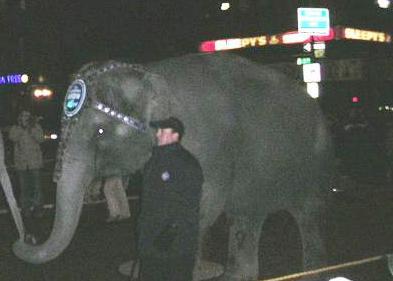
Anyone reading this who is not a New Yorker or a circus follower should know that the elephants have reportedly made their last trip into New York City.

CLEANING UP GOP MESS 
HUFFINGTON POST


BY John Tepper Marlin

November 9, 2008 – In spring, the Ringling Brothers and Barnum & Bailey circus comes to New York City. A dozen-and-a-half elephants march through the Queens Midtown Tunnel in the early a.m. to report for circus duty at Madison Square Garden. 

Following them warily is a cadre of sanitation workers with shovels, a truck and water to clean up the mess the elephants leave behind.

2008-10-10-elephantwalk1.jpg
Elephants walk into New York City before dawn, followed
by men with shovels, and a truck with a flushing system.
And that’s what Ben Bernanke’s Fed is trying to do with the financial mess left by a series of GOP administrations that have 
- cut taxes on top earners while waging wars,
pumped up the national debt,
- increased U.S. fiscal dependence on foreign debt buyers.
dismantled bank regulations tracing back to 1913 and 1933,
- enabled dangerous financial transactions, while they have
- failed to regulate the shadow banking system.
So it’s fair that the percentage-point drops in the Dow translate to drops in voter support for GOP candidates on November 4, 2008. No wonder John McCain has made a lunge for the middle-class vote with his out-of-character and poorly conceived American Homeownership Resurgence Plan. 
The financial crisis of today has long been feared, Greg Ip noted in a Wall Street Journal blog 16 months ago
As an academic in the early 1980s, Mr. Bernanke pioneered the idea that the financial markets, rather than a neutral player in business cycles, could significantly amplify booms and busts. Widespread failures by banks could aggravate a downturn, as could a decline in creditworthiness by consumers or businesses, rendering them unable to borrow. Mr. Bernanke employed this “financial accelerator” theory to explain the extraordinary depth and duration of the Great Depression.
Even though bank weakness is less likely to hurt the economy today, given banks’ reduced importance as lenders, the financial accelerator is still relevant. That is because “nonbanks” — lenders, such as standalone mortgage companies, that don’t accept deposits — also “have to raise funds in order to lend, and the cost at which they raise those funds will depend on their financial condition — their net worth, their leverage, and their liquidity.”
Mr. Bernanke doesn’t say it, but the current crisis in the subprime mortgage market may be a perfect illustration of the financial accelerator at work today. Many subprime borrowers are facing bankruptcy because their net worth has collapsed and they can’t get new credit. Similarly, numerous subprime lenders have gone bankrupt because they could not get financing to continue operations from newly skeptical Wall Street lenders.
A prescient comment on this post pointed out that financial crises now have special potential for world-wide catastrophe because of the global reach of the U.S. financial system:
The serious mistakes of modern day economic analysis are to ignore the huge trade imbalance created by the globalization process. The huge trade deficit of US must flow back to US market and be lent to someone. As we know, lending generates more lending and who knows how many trillions this US trade deficit have ballooned to every year. It is this huge liquidity glut that is supporting US Government’s debt spending, US consumers' borrow and spend frenzy, huge borrowings of private equity firms and other M&A activities, enormous borrowings of hedge funds and so on. It is no wonder that the prolonged Fed tightening has lost its punch and takes so long to affect the home mortgage market. CK - June 16, 2007. 
Follow John Tepper Marlin on Twitter: 

Wednesday, October 18, 2017

TAX VOTE IMMINENT | Trump Stumps for Deficit-Financed Cuts

Tax Cuts Financed by Borrowing, for the Wrong Taxpayers, at the Wrong Time?
October 18, 2017 – The following is an up-to-the-minute report on tax legislation from Dana Chasin in Washington, D.C.

It describes President Trump's tactics to promote his deficit-financed tax-cut program, a Keynesian fiscal-recovery strategy at a time of full employment. A Senate vote is imminent.

Chasin's report is titled "Trump Wooing Democrats on Tax; Outside Groups Making Inside Pitches Too. (Update #215.)" Reposted here by permission.

Senate debate continued today on the budget resolution that the GOP now has the votes for, and intends to pass, tomorrow night. The resolution includes reconciliation instructions for a $1.5 trillion deficit-financed tax cut. As we watch the amendment process – a.k.a. "Vote-a-rama" – and await the final vote, we examine a strategic choice Trump has pursued while pitching his plan around the country.

Over the last few months, Trump has targeted specific Democratic Senators from states he won who are in the ballot in 2018, seeking to cajole them to join him on his tax plan. What tactics has he employed?  How have outside groups weighed in? Can these efforts succeed? See below.

___________________

Trump’s Methods

Trump has been holding rallies in states he won that have Democratic Senators regularly over the last six weeks. He started just before Labor Day in Missouri, where he called on voters to “vote out” Senator McCaskill if she does not go along with his tax agenda.

The President appeared with Senator Donnelly at his event in Indiana and used a teasing tone to pressure the Senator. In an even lighter approach, Trump gave Senator Heitkamp a ride on Air Force One and praised her as a good woman who he hoped would support his tax plan. Senators Donnelly, Heitkamp, and Manchin each declined to sign a letter with 45 other Democrats opposing tax cuts for the top 1 percent.

Trump has not yet visited Montana. Sen. Tester extended Trump an invitation to visit his state. Expect Trump’s efforts with Tester to be as soft-peddled as with Sen. Heitkamp

Other Forms of Pressure

Trump is arranging dinners with Democratic Senators to woo them on tax. So far, he has dined at the White House with Sens. Manchin, Heitkamp, and Donnelly. Ivanka, Jared, and the administration's legislative director Marc Short hosted Manchin, Heitkamp, and McCaskill on Monday. Sen. McCaskill aired concerns about pass-through rates and insufficient child tax credits.

Trump enlisted Vice President Pence to push their tax plan in Indiana to help pressure Sen. Donnelly. Pence has also pushed the tax plan in Michigan, implicitly targeting Sen. Stabenow. Vice President Pence found more friendly terrain in West Virginia where Sen. Manchin joined him at a tax event in a state that Trump carried by 41 points.

Trump-allied groups are running ad campaigns against Senators Manchin, Heitkamp, and Tester. The ad shows President Kennedy claiming tax reductions would stimulate growth and boost worker wages. The 30-second ad buy costs six figures and has run on television in three states represented by in-cycle Democratic Senators.

There are three potential objectives in the administration’s barnstorming campaign.

Getting to 50: A small but significant number of GOP senators are raising objections to the tax proposal’s deficit impact. The administration worries about a repeat of the healthcare fiasco when Senate Republicans could not find the votes undo the ACA and hopes to coax one or two centrist Democrats to move Trump’s tax proposal in the event any Republicans break ranks.

Getting to 60?: The administration is concerned Senate Republicans might fail to pass tax reform via reconciliation (either because they cannot pass a budget resolution or because the vote fails on the floor). It may be  keeping open the remote possibility of a permanent comprehensive reform package that could pass through regular order with eight Democratic votes – extremely unlikely, as it would require a thorough rewrite of the current proposal.

Positioning for 2018: Trump might use the tax issue to help Republicans position themselves against Democratic senators in the 2018 midterms. He has targeted Democrats in states he won in 2016, calling on voters to “vote out” senators who oppose his tax plan. Nevertheless, Trump wants a win now to deliver legislation in his first year; Congressional incumbents may benefit more from election year accomplishments.

Trump’s Targets

To push his tax agenda, President Trump has targeted six Democrats with rallies in their states, invitations to the white house, and ad buys. He has taken a different approach to each Senator.

Sen. Joe Donnelly, Indiana – The President chided Donnelly during an Indiana tax rally, making an appearance with the Senator. The two have met over dinner at the White House. Sen. Donnelly is not close to supporting the current framework, as the tax benefits are not sufficiently aimed at the middle class.

Sen. Heitkamp, North Dakota – Trump made a special effort to play nice with Sen. Heitkamp on a trip to Bismarck last month. Not only did he praise her during his tax speech, but he also brought her along from D.C. on Air Force One. Trump-allied groups have invested 30-second ad buys promoting tax cuts on North Dakota TV. Sen. Heitkamp is well liked by the North Dakota business community and has extensive experience in tax policy and administration. She opposes cuts for the top one percent and/or additions to the deficit. Heitkamp has indicated interest in collaboration on tax reform, reaching out after Trump’s visit but the administration has not contacted her or her staff since.

Sen. Joe Manchin, West Virginia – Sen. Manchin dined with the President and attended an event with the Vice President to discuss tax reform. Trump was scheduled to make a trip to West Virginia but had to cancel to travel to Las Vegas in the wake of the shooting. He's unreachable, barring a radical revision. Sen. Manchin would set the corporate rate at 25 percent, the pass-through rate at 30 percent, and would tax money stashed overseas at 10 percent. Like Republican Bob Corker, he would oppose any plan that adds too much to the debt. He seems to have been most effective among Democrats at negotiating details with the administration.

Sen. Claire McCaskill, Missouri – She is the first Senator to be targeted by the President during his August visit to kick off his tax plan road show. The President called her out by name saying that if she doesn’t support his plan Missouri should vote her out. Sen. McCaskill emphasizes simplicity, expanding child tax credits, opposing the pass through rate cut. She stated at a town hall recently that she would love to help the administration on a tax reform package, but the current framework is only a cut for the one percent, not middle class families.

Sen. Debbie Stabenow, Michigan – Vice President Pence stumped for tax reform in Michigan. There have been no reports of President Trump pursuing direct personal outreach. Sen. Stabenow has focused on tax reform as it relates to supporting workers.

Sen. Jon Tester, Montana – The President has not yet visited Montana. This led Tester to invite the President to his state – which does not suggest he is close to supporting the framework. Trump-allied groups invested in 30-second ad buys promoting tax cuts in Montana. Sen. Tester articulated his priorities on tax: simplify it, make sure it doesn’t add to the debt, and give a break to working families and small businesses.

Will It Work?

As hard as Trump works, his efforts are not yet producing results and despite the extent of the investment, return on it looks fanciful. None of his Democratic targets support the present tax framework. Primary reasons are the plan’s inequity, lack of emphasis on the middle class, the deficit impact, and its lack of detail. To date, there are no signs of division within the Senate Democratic caucus on Trump's tax plan and only fitful indication that Trump might revise his plan to such an extent that Democrats might take another look.

None of these Senators is in a position to support Trump on taxes today, despite his cajoling. To attain bipartisanship, Republicans will have to move closer to Manchin’s principles. From any angle, Trump’s barnstorming appears to to be little more than an attempt to create cover in the event of a meltdown in the Senate. As the tax plan stands now, Democrats will be unwilling give him any votes.


See also Update #211 and Update #204 by Dana Chasin, also on tax reforms.
[Also: Politico, "Why Trump Will Regret Passing Tax Reform."]

Thursday, June 8, 2017

JOBS | Suffolk County, NY

How is Trump doing?
In 2010, Randy Altschuler attacked the incumbent congressman from Suffolk County, NY, Rep. Tim Bishop, for not doing enough for the Long Island economy.

He said that 30,000 jobs had left Long Island during Bishop's incumbency. I pointed out in an article on Huffington Post that the number was a lie. The correct figure was a gain of 36,000 jobs. Altschuler stopped using the number, but not until after he sent a glossy card to every voter with the lie plastered all over it.

Lee Zeldin was next to campaign against Bishop, in 2008. He lost badly in a Republican-leaning district. But in 2014 he adopted a straight Tea Party program, one of the first campaigners to do this. Here were his four main programs:
  1. Oppose raising the Federal minimum wage.
  2. Curtail Medicaid benefits. 
  3. Simplify the Federal tax code and cut taxes on the rich. 
  4. Cut Federal spending.
Zeldin was one of the first of the Tea Party electeds, in 2014. The GOP gained a majority in both the House and Senate in the 114th Congress, 2015-16. So how have Zeldin and the GOP Congress been helping Suffolk County? Let's ignore the first year, during which Zeldin was finding out where the bathrooms are in the maze of Capitol offices. Few Members of Congress make a dent in Washington in their first year (one reason for respecting seniority). Let's look at the second year of his term of office. How has the Suffolk County economy performed in 2016?

County-level numbers for jobs and wages are released quarterly and the numbers for the fourth quarter of 2016 were just released by the BLS on Wednesday. Here is the story for Suffolk:

Jobs. Suffolk's nonfarm payroll jobs rose to 661,400 in the fourth quarter of 2016, an increase of 900 jobs.

That's fewer than 1,000 jobs, compared with Bishop's presiding over growth of   36,000 jobs when he was attacked by the GOP for not doing enough for the economy.

The tiny growth rate during 2016 ranks 205th of 345 large counties for which the BLS computes this information, about 60 percent down the list. Within New York State, the growth rate is in the bottom half of the 18 large counties on the BLS list.

Wages. But maybe, has the quality of the jobs improved under Zeldin? What has happened to weekly wages? The news is much worse. Wages in Suffolk County declined by 3.5 percent, placing the county 289th out of 345 large U.S. counties, i.e., in the bottom fifth. Only two counties out of the 18 in New York State did worse.

This is not a good record. Since November 2016 the GOP has not only Congress but the White House, and a president who promised more jobs. We are waiting and watching.


Tuesday, March 14, 2017

TRUMP | Former Health Care Policy (1999)

Trump in 1999
On October 6, 1999, here is what Donald Trump thought about health care and reproductive rights, in an interview with NBC's Stone Phillips:
PHILLIPS: Health care?
Mr. TRUMP: [I'm] liberal on health care, we have to take care of people that are sick.
PHILLIPS: Universal health coverage?
Mr. TRUMP: I like universal, we have to take care, there's nothing else. What's the country all about if we're not going to take care of our sick?
PHILLIPS: Abortion?
Mr. TRUMP: I hate the concept of abortion. I hate anything about abortion, and yet, I'm totally for choice. I think you have no alternative.

Tuesday, January 31, 2017

ANNE FRANK | U.S. Center Blasts Trump Ban

President Donald Trump (L) and Anne Frank (R), who was
captured by the Nazis and died in captivity. 
The Anne Frank Center for Mutual Respect (formerly the Anne Frank Center USA) has issued this statement signed by Steven Goldstein, the Center's Executive Director:

As President Trump prepares orders to wall out Mexicans and shut out refugees from America, today marks one of the most hateful days in our nation’s history. Donald Trump is retracting the promise of American freedom to an extent we have not seen from a President since Franklin Roosevelt forced Japanese Americans into internment camps during World War II. Today the Statue of Liberty weeps over President Trump’s discrimination.

President Trump is beyond the wrong side of history. He is driving our nation off a moral cliff.

When President Trump uses national security as a guise for racism, he doesn’t strengthen our national security. He compromises our national security by engendering disrespect for America by people around the world.

Make no mistake, suspending visas for citizens of Middle Eastern and African countries is not called national security. It’s called prejudice.

President Trump is now exacerbating the largest global refugee crisis in history. His slamming America’s doors on the starving, the wounded and the abused is a grotesque blot on our nation’s history of freedom. The President’s actions are an embarrassment to the timeless vision of America as inscribed by Emma Lazarus to “give us your tired, your poor, your huddled masses yearning to breathe free.”

Demonizing refugees and immigrants, and spending billions of taxpayer dollars to keep them out of our nation, will go down in American history as one of the most tragic deviations from our national conscience.

Related Links: Remembering the Holocaust . The Nazi Occupation and Resistance in Holland . Majority of Americans Now Disapprove of Trump's Actions . Trump's First Five Days . Time Coverage of Anne Frank Center